How did Apollo's computer work?
Why only one computer?
Because of limits on size, weight and power, the Command Module and the Lunar Module could each carry just one computer. No Apollo guidance computer, in either the Command Module or the Lunar Module, suffered a hardware failure during a mission.
MIT’s Instrumentation Laboratory chose to make the computer work properly the first time. The laboratory worked closely with Fairchild Semiconductor, the company where the integrated circuit was invented. The chips were tested in harsh conditions such as heat, vibration and contamination. If one chip failed a test, the whole batch it came from was thrown away. MIT picked only a single type of chip, which meant it could be tested more deeply and the maker could gain experience in producing it reliably.
Inside the computer
The computer’s erasable memory (today’s RAM) was only 2,048 words. Because there was so little erasable memory, the same memory address was used for different jobs at different times. Some memory locations were shared between seven different jobs.
The software was a real-time, multitasking operating system. It handled time-critical tasks, such as starting the descent engine at exactly the right moment, alongside priority-ordered jobs for less urgent work.
The alarms during the Moon landing
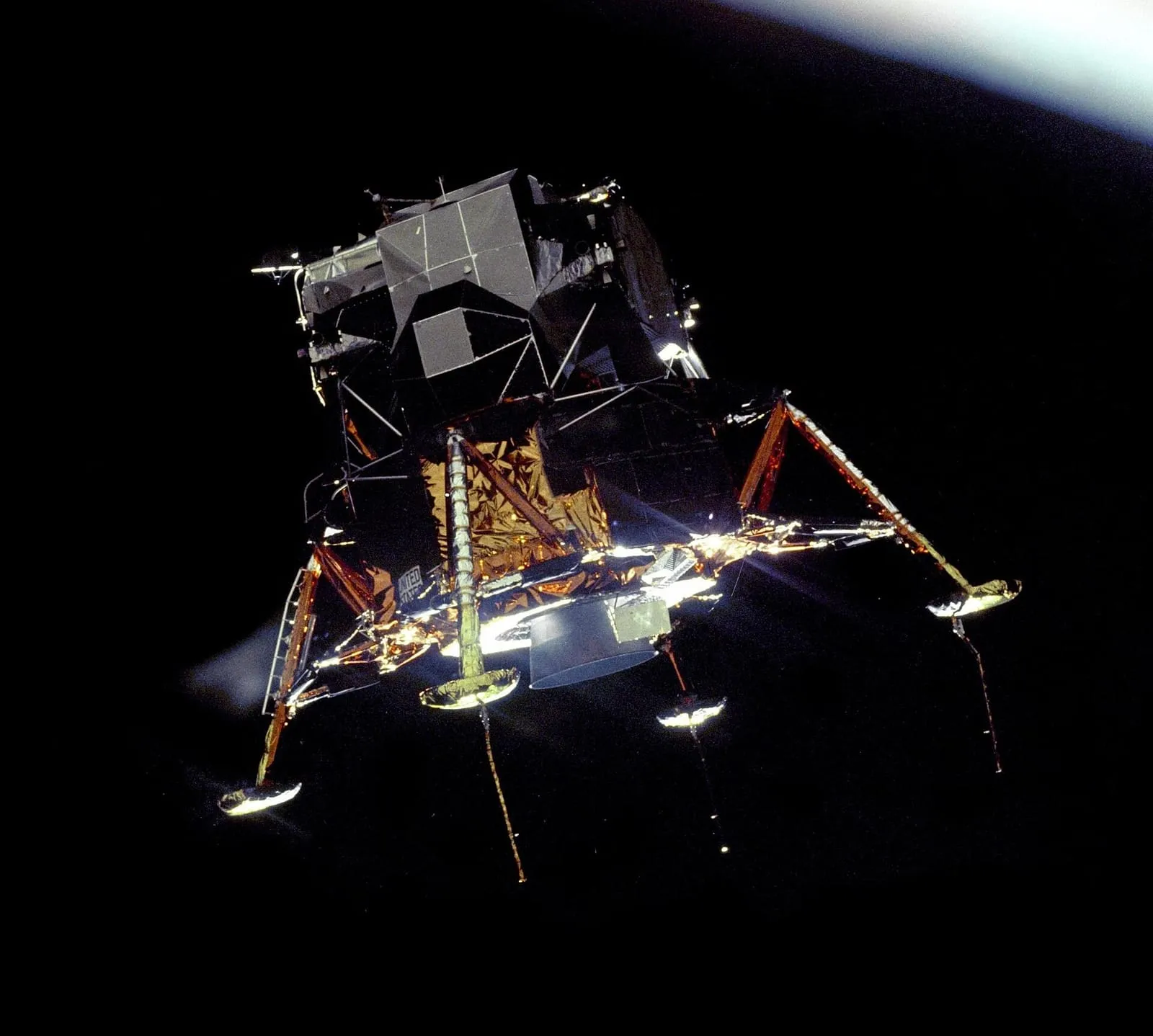
During the Apollo 11 Moon landing, program alarms 1201 and 1202 went off. Because of wrongly set radar switches, jobs to process rendezvous radar data that did not really exist were scheduled again and again. As a result, the memory set aside for jobs filled up and the 1202 alarm sounded.
Each time an alarm sounded, the computer restarted and ran the important jobs again, such as steering the descent engine. MIT had tested the restart ability thoroughly, so the team in Houston knew the mission could go on.
Backups and what came after
NASA insisted that Apollo’s main navigation be done in Houston with IBM’s large mainframes, with the spacecraft’s own system as the secondary. The wisdom of that decision became clear on Apollo 13, when the Command Module lost power. Grumman, the maker of the Lunar Module, insisted on a small backup controller that would step in if the computer failed. This “Abort Guidance System” was tested successfully on the Apollo 10 mission but was never needed.
In 1965, Gordon Moore, an employee of Fairchild Semiconductor, wrote an essay about fitting more components onto integrated circuits, and Moore’s Law was born. Philco supplied the thousands of integrated circuits used in the Apollo computers.
Test yourself
Three questions from the article. Pick an answer to find out.
Question 1 of 3
How many words of erasable memory (today's RAM) did the Apollo computer have?
The computer's erasable memory was only 2,048 words. Source: history.nasa.gov
Show answer
Right answer: 2,048 words
The computer's erasable memory was only 2,048 words. Source: history.nasa.gov
Question 2 of 3
What did the computer do when a program alarm went off during the landing?
The computer restarted and carried on with important jobs such as steering the descent engine. Source: history.nasa.gov
Show answer
Right answer: It restarted and carried on with important jobs such as steering the descent engine
The computer restarted and carried on with important jobs such as steering the descent engine. Source: history.nasa.gov
Question 3 of 3
Did the Apollo computers ever suffer a hardware failure during a mission?
No Apollo guidance computer, in either the Command Module or the Lunar Module, suffered a hardware failure during a mission. Source: airandspace.si.edu
Show answer
Right answer: No, they never suffered a hardware failure
No Apollo guidance computer, in either the Command Module or the Lunar Module, suffered a hardware failure during a mission. Source: airandspace.si.edu