What are the four forces acting on an aeroplane?
Two big problems
Flying involves two big problems: beating an object’s weight with an opposing force, and controlling the object in flight. Four forces act on an aeroplane in flight: weight, lift, drag and thrust.
Weight
Weight is a force that always points toward the centre of the Earth. How large it is depends on the mass of all the aeroplane’s parts, the fuel and any load on board. Weight is spread throughout the aeroplane, but it can often be thought of as gathered at a single point called the centre of gravity.
During a flight, the aeroplane’s weight keeps changing as it burns fuel. So the pilot has to keep adjusting the controls to keep the aeroplane balanced.
Lift
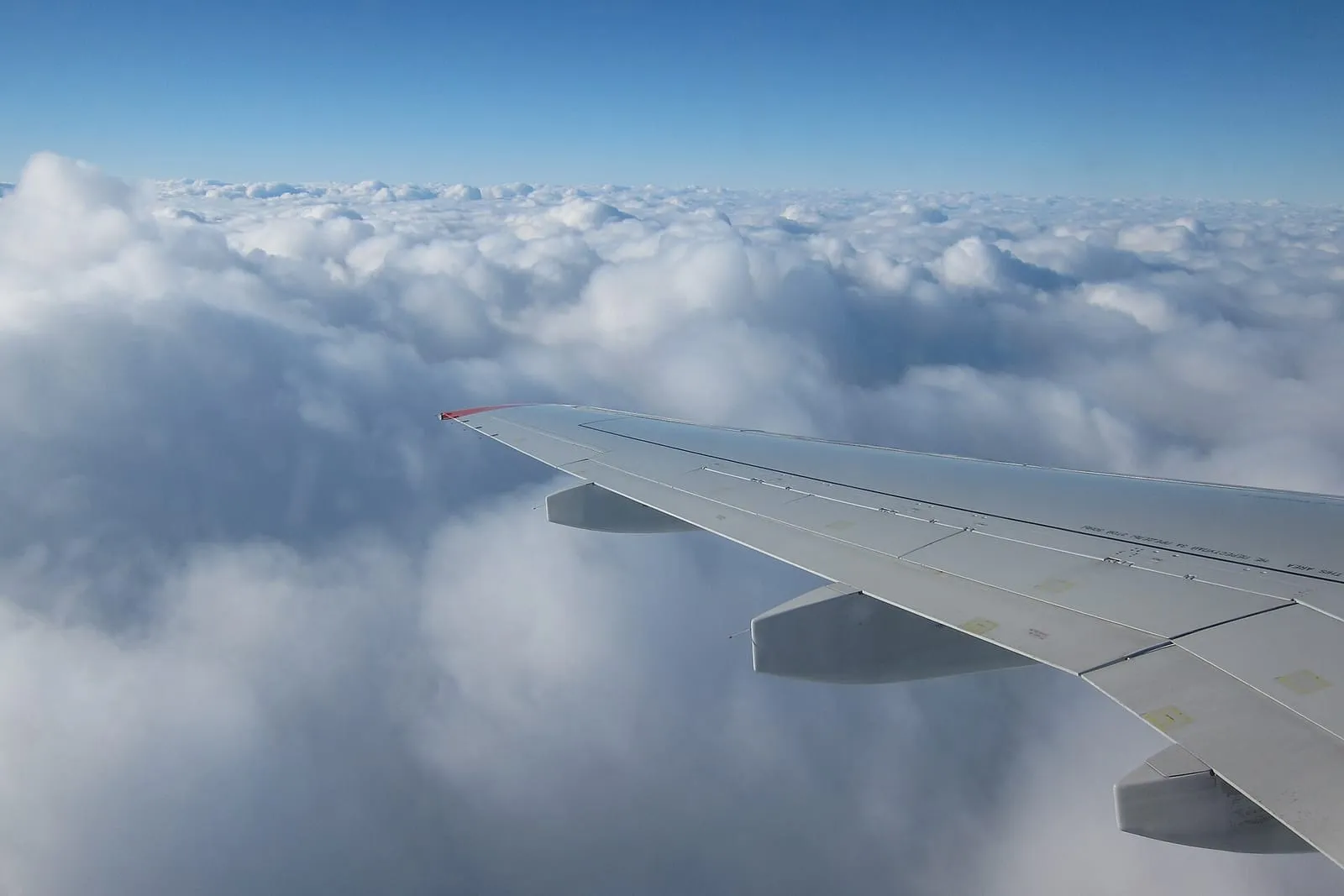
To beat the force of weight, aeroplanes produce an opposing force called lift. Lift is an aerodynamic force made by the aeroplane’s movement through the air. It points at right angles to the direction of flight. How large lift is depends on several things, such as the aeroplane’s shape, size and speed. Most of the lift comes from the wings.
The aeroplane is steered in roll, pitch and yaw with aerodynamic surfaces.
Drag
As an aeroplane moves through the air, the air resists its movement, and this resisting force is called drag. Drag points along the direction of flight, but the opposite way. How large drag is depends on things such as the aeroplane’s shape, the “stickiness” of the air and the aeroplane’s speed.
Thrust
To beat drag, aeroplanes use a propulsion system that produces a force called thrust. The amount of thrust is set by the kind of engine, how many engines there are and where the throttle is set.
In jet engines, thrust is the reaction to hot gas rushing out of the nozzle. The hot gas goes out of the back, but the thrust pushes forward; this action and reaction is explained by Newton’s third law of motion. The engine’s job is only to beat the aeroplane’s drag, not to produce lift. The wings do the lifting, not the engines.
There are even aeroplanes with no engine at all that fly perfectly well; they are called gliders. The Space Shuttle is a glider on re-entry and landing; its rocket engines are used only to launch it into space.
The balance of forces
The way an aeroplane travels through the air depends on how strong the forces are relative to each other, and which way they point. If the forces are balanced, the aeroplane cruises at a steady speed. If they are unbalanced, the aeroplane speeds up in the direction of the largest force.
If the pilot increases the engine’s thrust, the aeroplane speeds up and its velocity rises. In the end the new drag matches the new level of thrust, the forces balance again and the acceleration stops. Some aeroplanes, such as jet airliners, spend most of their lives in cruising flight, balancing drag.