Moon phases: why does the Moon look different every night?
Does the Moon really change shape?
Some nights the Moon’s whole face shines brightly, on others we see only a thin crescent, and sometimes the Moon seems to vanish. These changes are called the phases of the Moon. Yet the Moon’s shape does not change over the month; what changes is the way we see it.
The Sun is the only object in the Solar System that shines with its own light. Sunlight comes from one direction and always lights up the half of the Moon that faces the Sun. Seen from Earth, how much of this lit part we can see is different every night, depending on where the Moon is in its orbit.
How do moon phases form?
The Moon’s eight phases follow this order: new Moon, then waxing crescent, first quarter and waxing gibbous, then full Moon, followed by waning gibbous, last quarter and finally waning crescent. This cycle repeats roughly every 29.5 days.
At new Moon, the lit side of the Moon faces the Sun and the dark side faces Earth, so the Moon cannot be seen. Because the Moon’s orbit is tilted, the Moon does not usually pass directly between Earth and the Sun at this phase. At first quarter we think we are seeing a “half Moon”, but we are really seeing half of the Moon’s lit half. At full Moon, seen from Earth, the Moon is directly opposite the Sun and its lit side faces us.
From the Northern Hemisphere, a waxing crescent appears as a thin curve of light on the right. A waning crescent, seen from the Northern Hemisphere, appears as a thin curve on the left.
A waxing crescent grows a little every day, as the Moon’s orbit brings more and more of its lit side into view. The Moon rises a little later each day than the day before. During the waning gibbous phase the lit part seems to shrink, but in fact the Moon’s orbit is simply carrying it out of our view.
Why 29.5 days and not 27?
The Moon takes about 27.3 days to complete one trip around Earth. Because of how sunlight reaches the Moon, though, about 29.5 days pass between one new Moon and the next. The Moon is on average 384,399 km from Earth, a gap that could fit about 30 Earths.
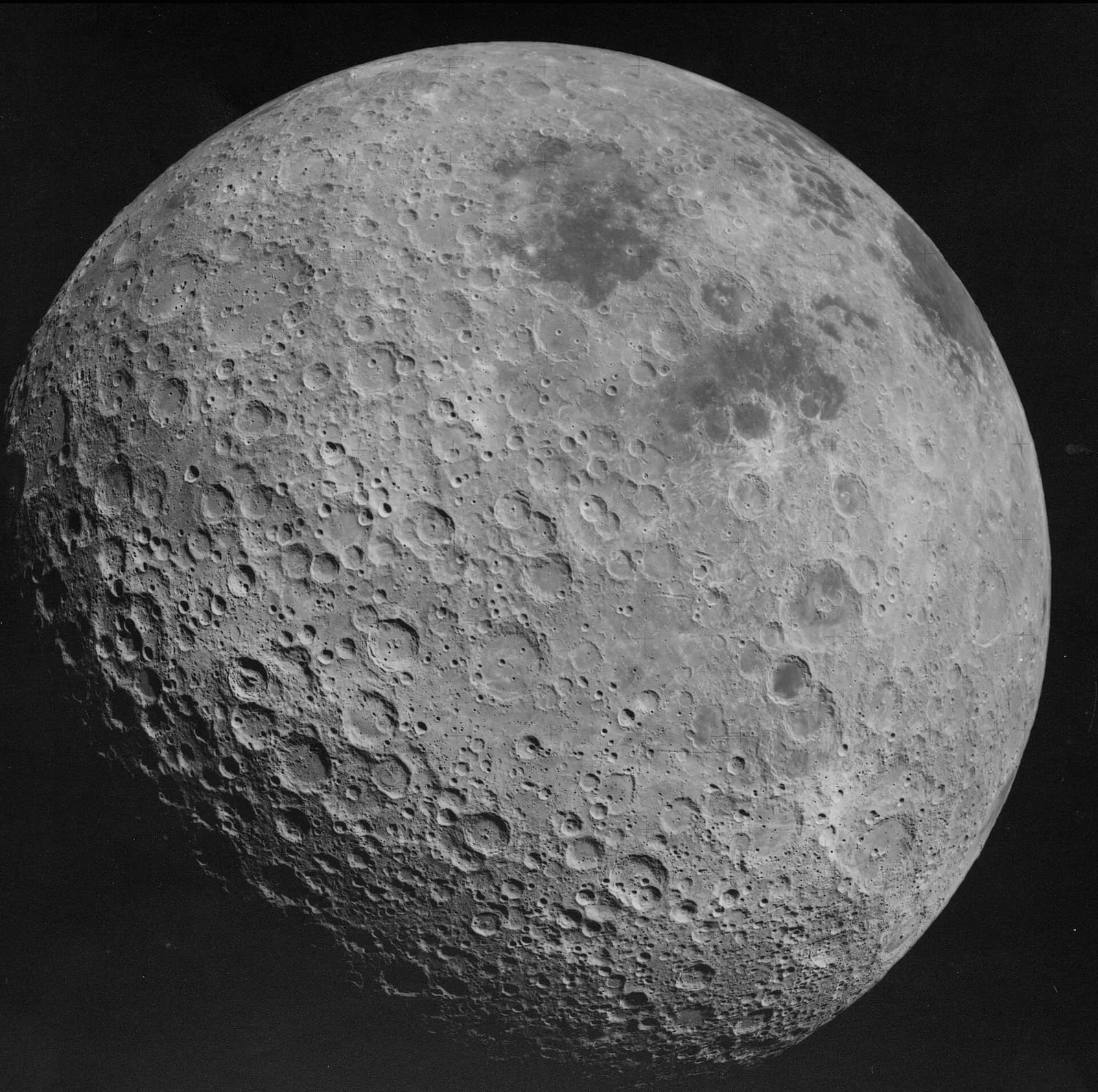
The Moon is tidally locked to Earth: it spins once on its own axis in the time it takes to go once around Earth. That is why we always see the same side of the Moon from Earth.
Why does the Moon seem to wobble slightly?
Regular Moon-watchers know that the Moon seems to twist, nod and roll slightly on its journey across the sky. This is called libration. Because the Moon’s orbit is not a perfect circle, its distance from Earth and its speed in orbit change slightly over the month. The 5-degree tilt of the Moon’s orbit also makes it seem to nod.
When the Moon is closest to Earth and moving fastest, its spin is not quite enough to keep exactly the same side facing us. At these times we see a little more of the Moon’s eastern side. When it is farthest away and moving slowest, its spin gets slightly ahead and we see a little more of its western side. The Moon’s apparent tilting from side to side, like a metronome, comes mostly from the tilt of Earth. Earth’s axis is tilted by 23.5 degrees.
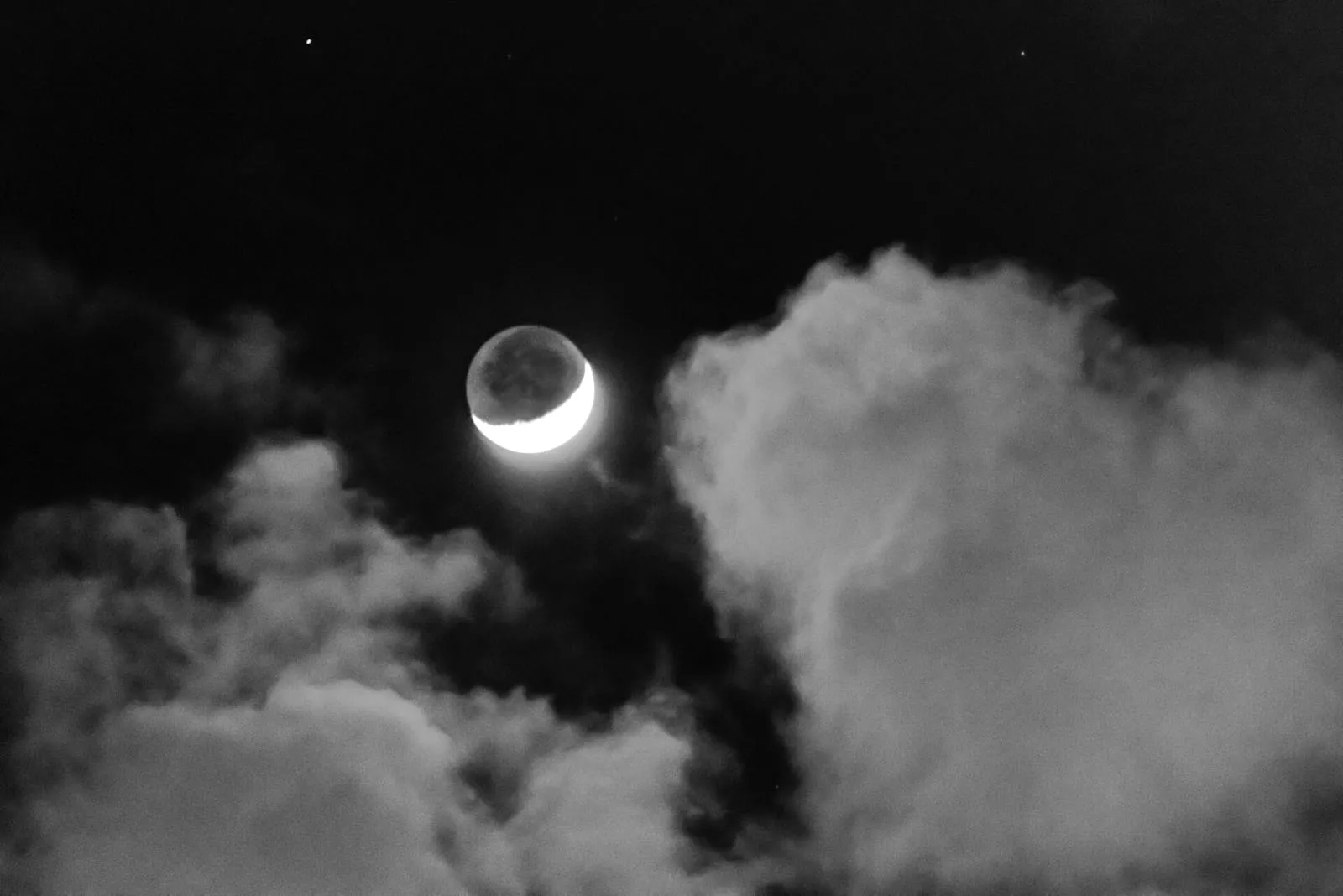
Why does the dark part of a crescent glow faintly?
When the Moon is a crescent, its dark part can sometimes be seen glowing faintly. This happens because sunlight reflects off Earth’s surface onto the Moon; this light is called earthshine.
Can the Moon be seen during the day?
The Moon is often visible during the day as a faint, pale presence. When the Moon can be seen during the day depends on its phase, the time of year and where we are on Earth. A waxing crescent rises in the morning after sunrise and sets in the evening after sunset. A first quarter Moon rises around midday and sets around midnight. A full Moon rises at sunset and sets at sunrise. A last quarter Moon rises around midnight and sets around midday. A new Moon rises and sets with the Sun, but it cannot be seen in the daytime sky because its dark side faces Earth.
What phase was the Moon in on the day you were born?
Pick a date and we will show which phase the Moon was in that day and how much of its visible face was lit.
As seen from the Northern Hemisphere
The date is calculated only in your browser; it is never sent anywhere or saved.
How we calculate it
- The calculation runs in your browser with the open-source astronomy-engine library (MIT licence).
- The library finds the difference in ecliptic longitude between the Sun and the Moon as seen from the centre of the Earth: 0° is new Moon, 90° first quarter, 180° full Moon and 270° last quarter.
- If one of these four moments falls on the chosen day in your device's time zone, the day is named after that phase. Otherwise the phase in between is shown from the angle at midday: a crescent or a gibbous Moon. The lit fraction is also calculated for midday.
- Limits: the time and place of birth are not taken into account; on days when the phase changes, the same day may be named differently in another time zone. The drawing shows the view from the Northern Hemisphere.
- This is an astronomy calculation; it does not offer horoscopes or fortune-telling.
Test yourself
Three questions from the article. Pick an answer to find out.
Question 1 of 3
Roughly how many days pass from one new moon to the next?
Because of the way sunlight reaches the Moon, about 29.5 days pass from one new moon to the next. Source: NASA
Show answer
Right answer: About 29.5 days
Because of the way sunlight reaches the Moon, about 29.5 days pass from one new moon to the next. Source: NASA
Question 2 of 3
How many times does the Moon spin on its axis during one trip around Earth?
The Moon is tidally locked to Earth, so it turns on its axis exactly once for every trip it makes around our planet. Source: NASA
Show answer
Right answer: Exactly once
The Moon is tidally locked to Earth, so it turns on its axis exactly once for every trip it makes around our planet. Source: NASA
Question 3 of 3
When does a full moon rise?
A full moon rises at sunset and sets at sunrise. Source: NASA