What is at the bottom of the Mariana Trench?
Where is the Mariana Trench, and how deep is it?
The Mariana Trench stretches across the western Pacific Ocean, between Japan and Papua New Guinea. Challenger Deep, at the trench’s southern end, lies 10.9 km below sea level.
Challenger Deep, the lowest point of the trench, is named after the British Royal Navy ship Challenger 2, which found it in 1951.
Challenger Deep reaches a depth of nearly 11,000 metres, while Mount Everest rises only about 8,854 metres above sea level. Nor is Challenger Deep a single depression: it is made up of three separate depressions.
How did the trench form?
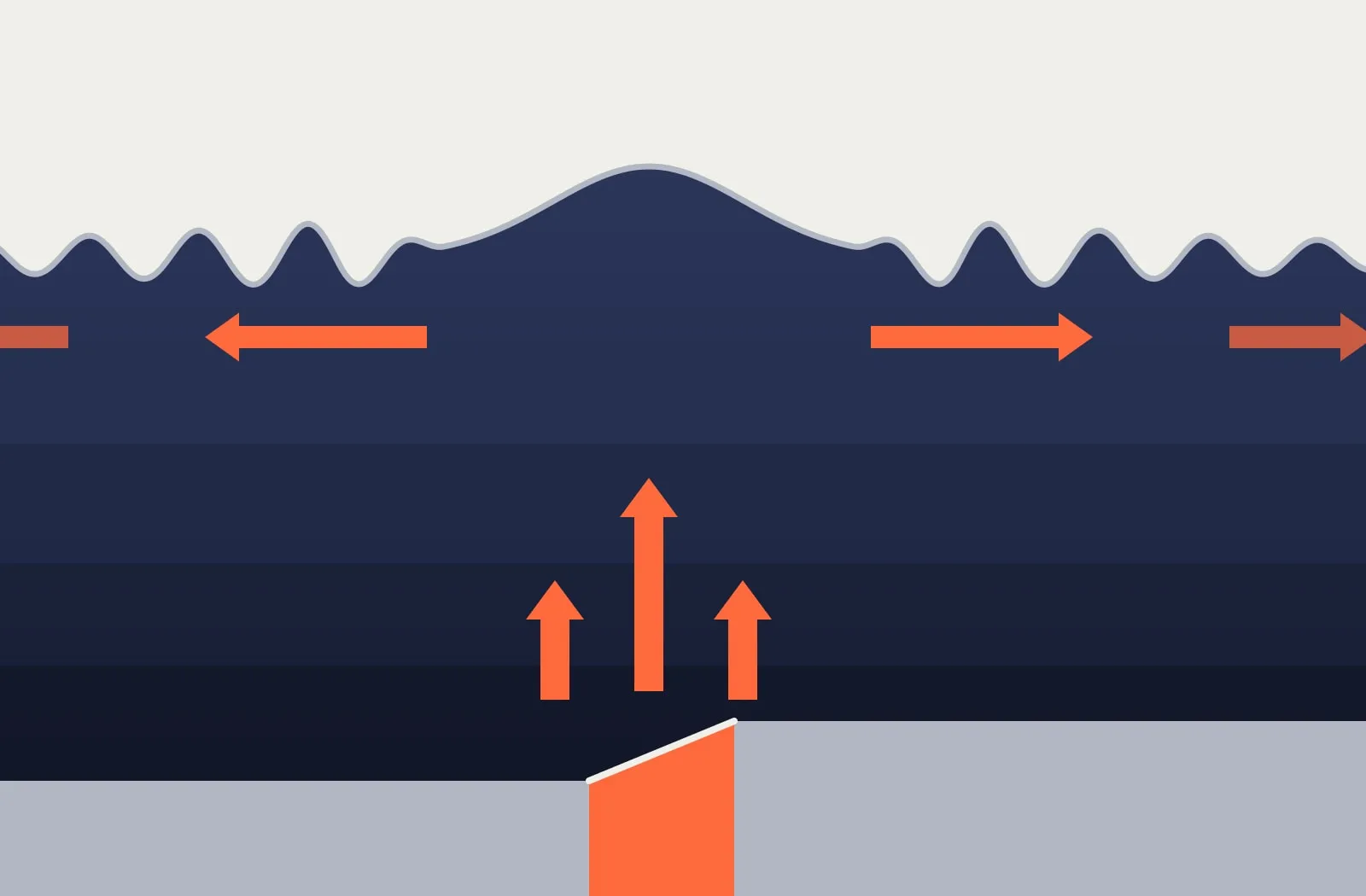
The Mariana Trench lies on the boundary between two of Earth’s tectonic plates: the Philippine Sea plate and the Pacific plate. As the plates move, the Pacific plate is pushed down under the Philippine Sea plate, a process known as subduction. The trench owes its great depth to this massive downward movement of rock.
Oceanographer Dawn Wright, who reached the bottom in 2022, describes seeing vast fields of boulders there, evidence that two plates are colliding. According to Patricia Fryer of the University of Hawaii, a sample collected on an earlier expedition suggests that a previously unknown tectonic plate may lie at the bottom of the trench. Fryer says the rock they collected turned out to be 100 million years younger than the Pacific plate. Scientists also found rocks at the plate boundary, at a depth of 5,000 metres, that point to volcanic activity: the deepest underwater eruption known at the time.
What are conditions like at the bottom?
Below about 1,000 metres, it is completely dark. The hull of the submersible Wright dived in was machined to be as close to a perfect sphere as possible, because this geometry is what protects the people inside from water pressure.
One small example of pressure tolerance is a new species of single-celled ciliate found in waters deeper than 3,000 metres near the trench. In the laboratory, this organism survived both at normal atmospheric pressure and at a pressure of 320 bar.
Who lives in the dark?
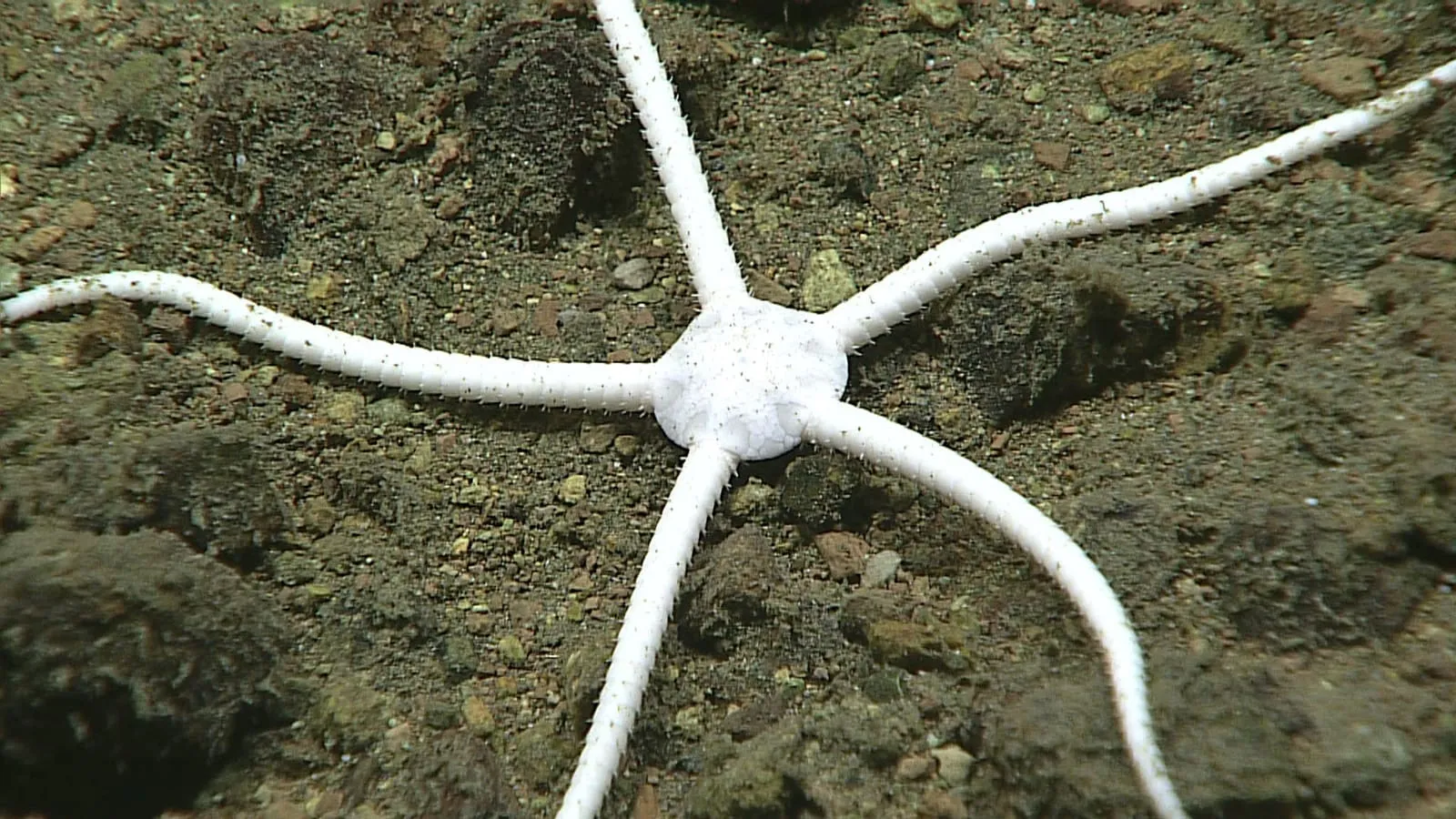
The few vehicles that have reached the deepest point report that it is not lifeless. Lugworms, skeleton shrimp and nearly 200 types of microbes have been detected there. The sediment on the trench floor is also rich in microorganisms. Scientists isolated a fungus of the genus Penicillium from a sediment sample taken at a depth of 11,000 metres.
On their way down, Wright’s team saw bioluminescent jellyfish and worm-like siphonophores through the submersible’s portholes.
In 2014, an international expedition to the Mariana Trench filmed a fish reported to be new to science at a depth of 8,145 metres, beating the previous depth record by about 500 metres. Alan Jamieson of the University of Aberdeen thinks it is a snailfish; he describes the animal as extremely fragile, looking as it swims as if wet tissue paper were trailing behind it. This depth is close to the limit at which scientists believe fish can survive. The “supergiants” filmed on the same expedition are a kind of amphipod normally 2–3 cm long. These giant forms can reach up to 30 cm.
Human traces reach all the way down
Scientists found radioactive carbon-14 in the flesh of shrimp-like crustaceans living in the trench, at levels high enough to show that it came from nuclear bomb tests. Natural ocean currents would have taken about 1,000 years to carry this carbon down to the depths of the trench. Researchers think it arrived faster through the food chain: the droppings and carcasses of surface-dwelling creatures sink to the bottom within weeks or months.
In another study, microplastics were found in every crustacean examined from the Mariana Trench.
Who has been down there?
In 1960, Lieutenant Don Walsh of the US Navy and Swiss oceanographer Jacques Piccard made an extremely risky journey to the bottom of the trench in a bathyscaphe called Trieste. The two scientists touched the bottom at 10,915 metres after a 4-hour descent in the dark. Japan’s uncrewed vehicle Kaiko reached the bottom of Challenger Deep in 1995.
In 2012, the film director James Cameron reached the seafloor alone, piloting his submersible, Deepsea Challenger. Cameron described it as a desolate, alien world. According to an interview published in 2024, Dawn Wright became the first Black person to reach the deepest point on Earth, and only the 27th person to do so.
According to Wright, most ocean exploration is done by robots, because they are more efficient, especially for mapping. Scientists have, for example, developed a soft exploration robot inspired by the structure of the deep-sea snailfish. In a field test in the Mariana Trench, the robot worked successfully at depths down to 10,900 metres. According to a collective estimate that Wright cited in the 2024 interview, only 26.1% of the ocean has been mapped in the modern detail that is needed.
Test yourself
Three questions from the article. Pick an answer to find out.
Question 1 of 3
How far below sea level is Challenger Deep, the deepest point in the ocean?
Challenger Deep, the deepest point in the ocean, lies 10.9 km below sea level. Source: the Guardian
Show answer
Right answer: 10.9 km
Challenger Deep, the deepest point in the ocean, lies 10.9 km below sea level. Source: the Guardian
Question 2 of 3
As you go down into the ocean, below roughly what depth does total darkness begin?
On the way down, total darkness sets in below about 1,000 metres. Source: the Guardian
Show answer
Right answer: Below about 1,000 metres
On the way down, total darkness sets in below about 1,000 metres. Source: the Guardian
Question 3 of 3
What was the first thing a research team saw when it reached the deepest point of the ocean?
Human traces have reached it too: the first thing a research team saw on reaching the bottom was a beer bottle. Source: the Guardian
Show answer
Right answer: A beer bottle
Human traces have reached it too: the first thing a research team saw on reaching the bottom was a beer bottle. Source: the Guardian