What is a tsunami and how does it form?
What is a tsunami?
A tsunami is a series of very long waves caused by a large and sudden displacement of the ocean. Tsunamis spread out in every direction from where they start and can cross entire ocean basins. On reaching the shore they can flood the coast dangerously and set off powerful currents that may go on for hours, even days.
The word tsunami comes from Japanese characters that mean harbour and wave. Tsunamis have nothing to do with tides, which result from the gravitational pull of the Sun and the Moon on the Earth’s oceans. So it is wrong to call a tsunami a tidal wave.
What sets off a tsunami?
Most often, a tsunami is set off by a major earthquake beneath or near the ocean floor. Landslides, volcanic activity, certain weather events and near-Earth objects (such as asteroids and comets) can also cause tsunamis. Most of the tsunamis in the Global Historical Tsunami Database (88 percent) result from earthquakes or from landslides triggered by earthquakes.
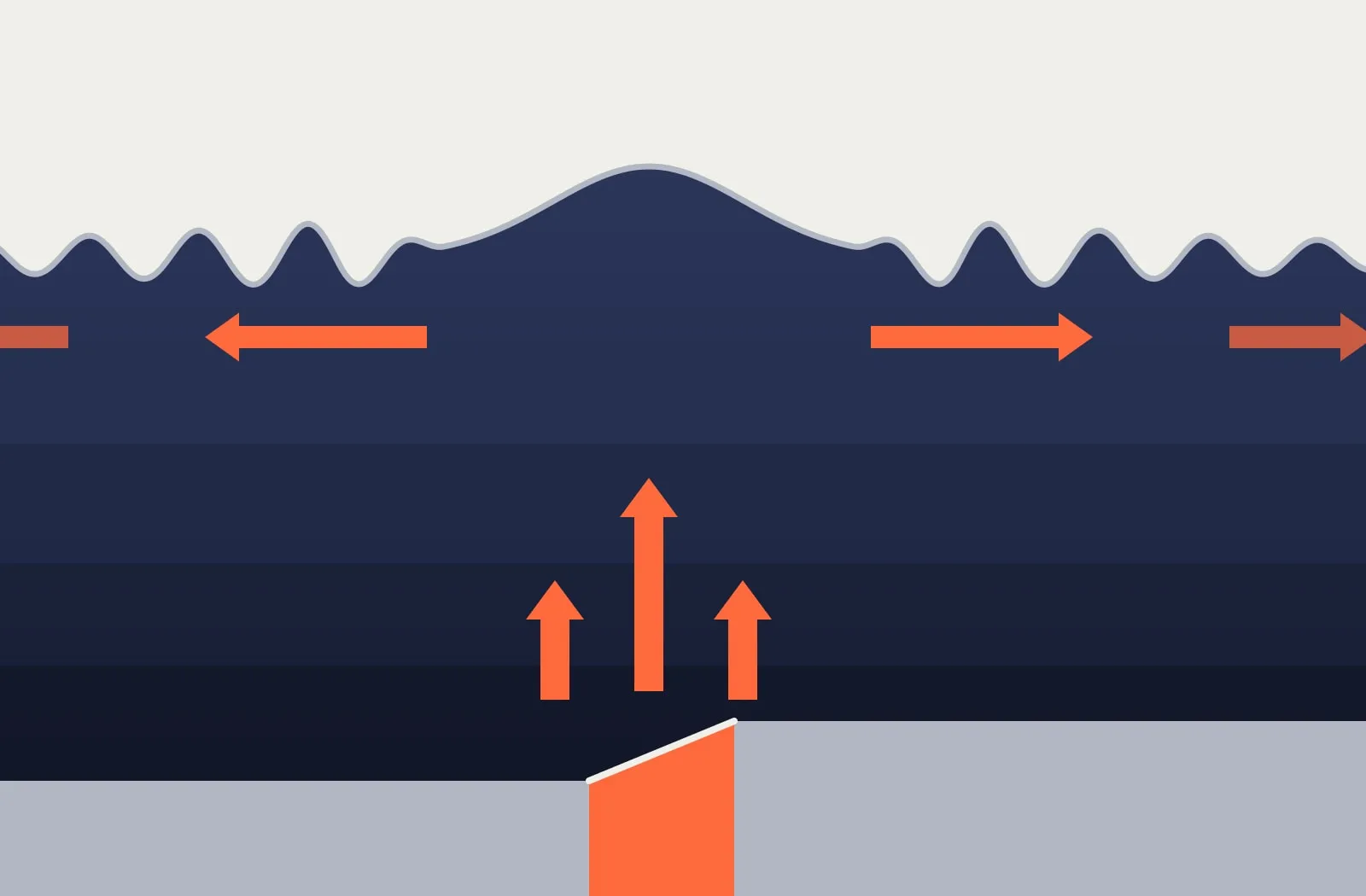
Earthquakes supply the energy that creates a tsunami through sudden movements of the water column. As the seafloor rises and falls, the water above it rises and falls too. As the water rises and falls trying to regain its balance, the tsunami spreads out in all directions. To set off a tsunami, an earthquake typically has to be large enough, and close enough to the seafloor, to produce the vertical seafloor movement.
Most tsunamis are caused by earthquakes of magnitude greater than 7.0 that occur under or very near the ocean. These earthquakes usually occur in or near subduction zones, where oceanic and continental plates collide. In general, an earthquake needs a magnitude above 8.0 to produce a tsunami dangerous to distant coasts.
How does the wave behave in the ocean and at the coast?
A few minutes after the earthquake, the first tsunami splits in two: one part heads out into the deep ocean (a distant tsunami) and the other towards the nearby coast (a local tsunami). The speed of both varies with the square root of the water depth, so a tsunami in the deep ocean travels faster than a local tsunami near the coast. In deep water, tsunami waves can move as fast as jet aircraft, and they slow down when they reach shallow water. The speed of tsunami waves depends on the depth of the ocean, not on the distance from the wave’s source.
In the deep ocean, the height of tsunami waves does not increase noticeably. As the waves travel towards the coast, they grow taller because the ocean gets shallower. The first part of the wave to reach the coast is sometimes a trough, so the sea appears to be pulling back from the shore. This is a common natural warning sign of a tsunami.
Except for the very largest tsunamis, such as the Indian Ocean event of 2004, most do not create huge breaking waves. Most of the damage tsunamis cause comes from strong currents and drifting debris. The first wave of a tsunami is often not the largest.
Where and when do they happen?
The Global Historical Tsunami Database lists 754 confirmed events from 1900 to 2015, and roughly 78 percent of them took place in the Pacific Ocean. Most tsunamis are small and harmless, or affect only coasts near their source. Tsunamis have no season; they can happen at any time, in any season and in any weather. Just as with the earthquakes behind most tsunamis, scientists have no way of foreseeing when or where the next one will strike.
Test yourself
Three questions from the article. Pick an answer to find out.
Question 1 of 3
What is the most common cause of tsunamis?
Most often, a tsunami is set off by a major earthquake beneath or near the ocean floor. Source: U.S. Tsunami Warning Centers (NOAA)
Show answer
Right answer: Major earthquakes beneath or near the ocean floor
Most often, a tsunami is set off by a major earthquake beneath or near the ocean floor. Source: U.S. Tsunami Warning Centers (NOAA)
Question 2 of 3
The word tsunami comes from Japanese characters meaning what?
The word tsunami comes from Japanese characters that mean harbour and wave. Source: U.S. Tsunami Warning Centers (NOAA)
Show answer
Right answer: Harbour and wave
The word tsunami comes from Japanese characters that mean harbour and wave. Source: U.S. Tsunami Warning Centers (NOAA)
Question 3 of 3
Do tsunamis have a particular season?
Tsunamis have no season; they can happen at any time, in any season and in any weather. Source: U.S. Tsunami Warning Centers (NOAA)
Show answer
Right answer: No, they can happen in any season and in any weather
Tsunamis have no season; they can happen at any time, in any season and in any weather. Source: U.S. Tsunami Warning Centers (NOAA)