How does gold form?
How does gold build up in the crust?
Gold is relatively scarce in the crust, but it is found in many different kinds of rock and in many geological settings.
Lode deposits
Lode (primary) deposits are places where gold was deposited from mineral-bearing solutions. Geologists have put forward several different hypotheses to explain where these solutions came from. According to one widely accepted hypothesis, many gold deposits, especially those in volcanic and sedimentary rocks, formed from circulating groundwater driven by heat. That heat comes from bodies of magma pushed into the crust within about 2 to 5 miles of the surface.
In geothermal systems, most of the water begins as rain and travels down through cracks and permeable layers in the cooler parts of the crust. Active geothermal systems that are used for natural hot water and steam in some parts of the US today offer a modern example of these gold-depositing systems.
As the water heats up, it dissolves metals from the surrounding rock. When the heated water reaches cooler rock at shallower depths, metallic minerals settle out and form veins or blanket-like ore bodies. According to another hypothesis, solutions containing gold are pushed out of magma as it cools, and they leave their ore behind as they move into cooler surrounding rock. A third hypothesis applies to gold veins in metamorphic rocks in mountain belts at the edges of continents.
Placer deposits
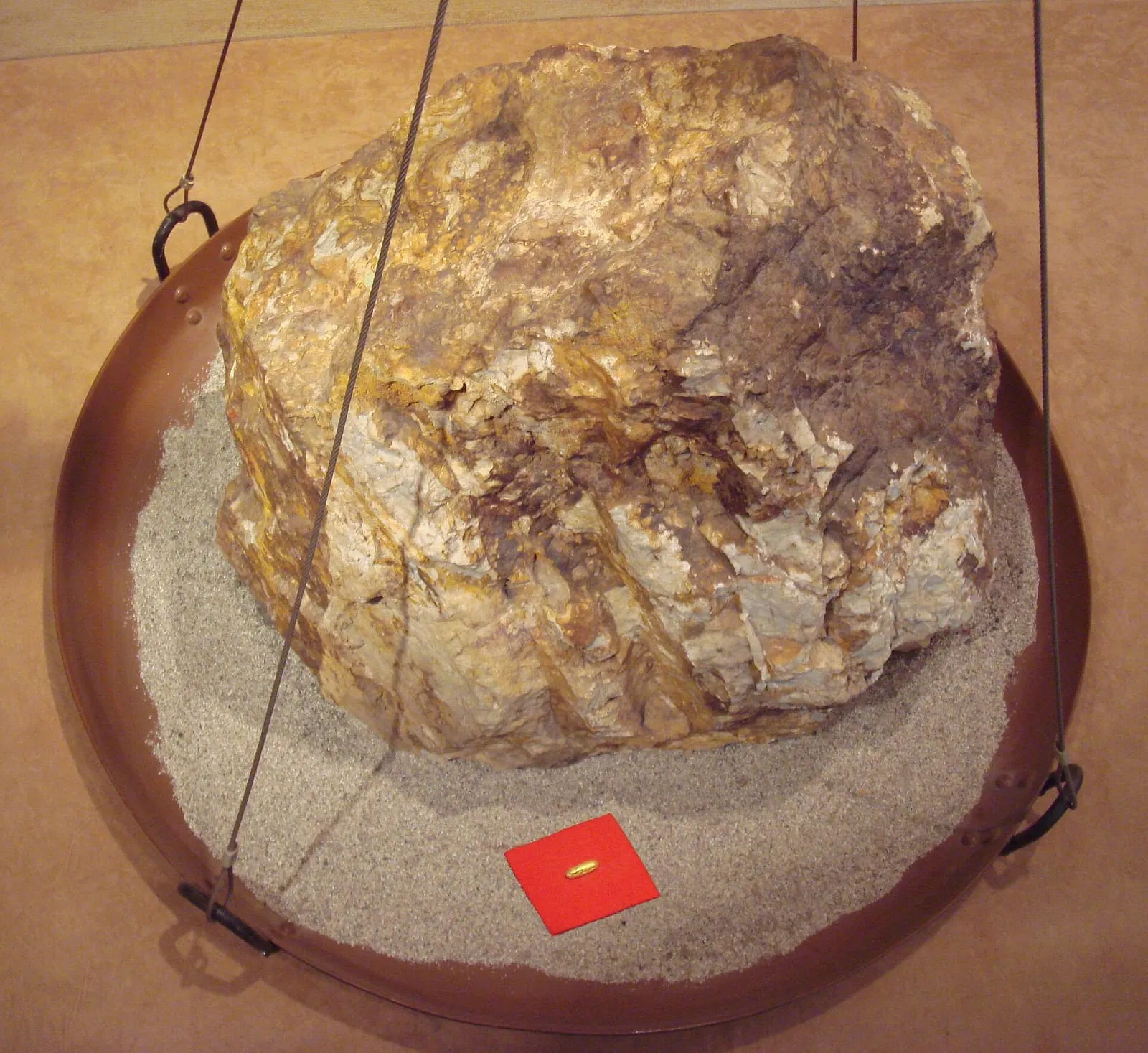
Placer deposits form when rock that contains gold is worn away, broken up or decomposed, and the gold is then concentrated by gravity. Gold resists weathering very well; once it is freed from the rock, it is carried downstream as metallic dust, flakes, grains or nuggets. Gold particles in stream beds often collect on or near the bedrock. Fine particles settle in hollows or pockets in sand and gravel bars where the current slows. The difference in density between gold and the surrounding waste rock allows gravity to concentrate the gold.
Throughout Earth’s history, placer deposits have formed in the same way. In these “fossil” placers, which later turned into hard rock, the shape of ancient river channels can still be made out.
Where do gold’s atoms form?
According to the Harvard & Smithsonian Center for Astrophysics, gold cannot form inside a star, unlike carbon or iron. The same centre says that one reason gold is rare on Earth is that it is rare in the universe too.
Observing a gamma-ray burst
According to a team from the centre, observations of a gamma-ray burst it studied provide evidence that the burst came from the collision of two neutron stars. The same team estimates that the gold produced and thrown out in this collision could amount to 10 Moon masses.
The kilonova NASA describes
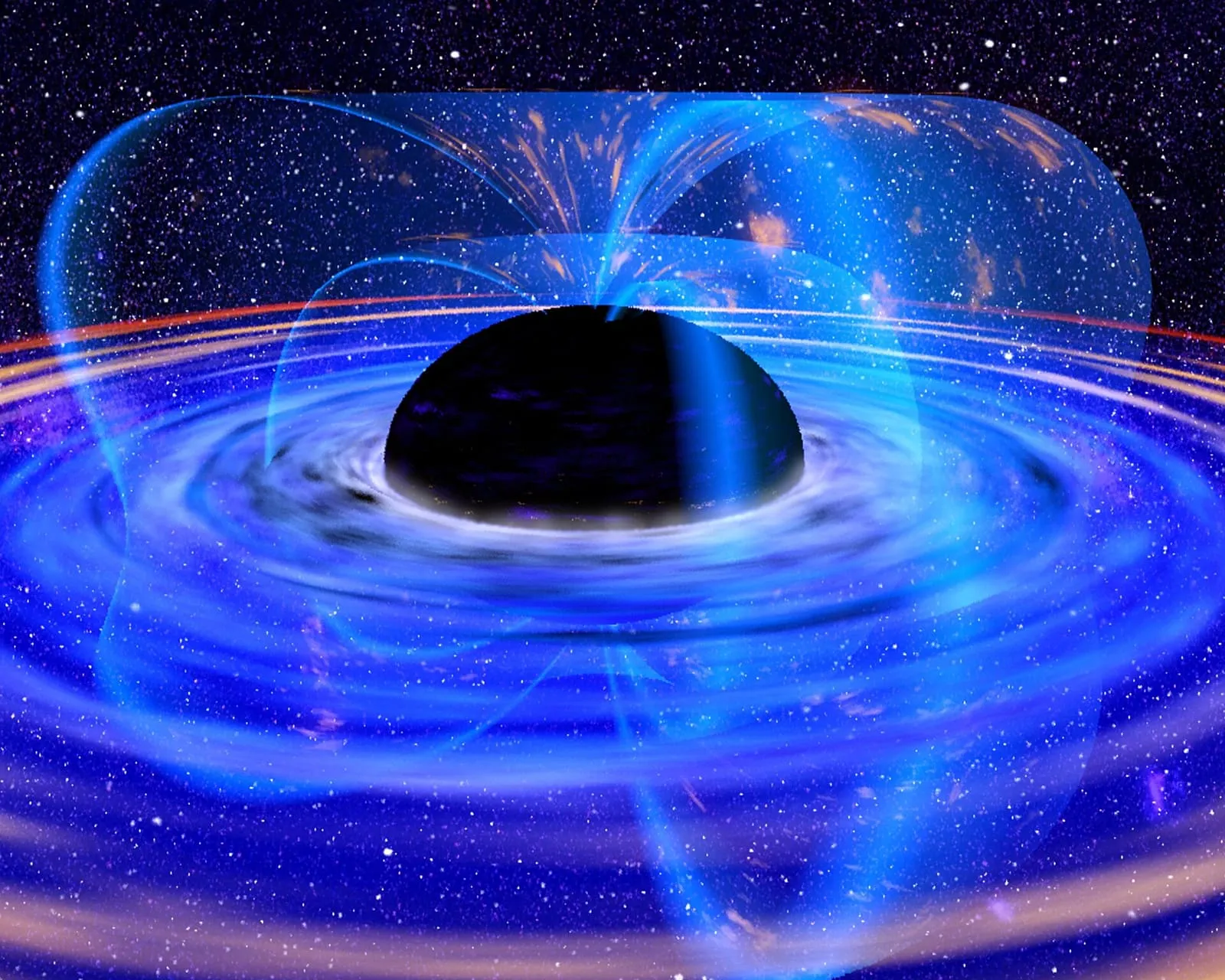
An illustration from NASA shows a cloud of debris, hot, dense and expanding, torn from neutron stars just before they collide. This cloud forms a kilonova, a cosmic event that happens when a pair of neutron stars, or else a neutron star and a black hole, come together. According to NASA, large amounts of some of the heaviest elements in the universe formed in this kilonova’s neutron-rich debris, including hundreds of Earth masses of gold and platinum.
Test yourself
Three questions from the article. Pick an answer to find out.
Question 1 of 3
How do placer deposits form?
Placer deposits form when rock containing gold is worn away and broken up, and gravity then concentrates the gold. Source: USGS
Show answer
Right answer: Rock containing gold is worn away and broken up, and the freed gold is concentrated by gravity.
Placer deposits form when rock containing gold is worn away and broken up, and gravity then concentrates the gold. Source: USGS
Question 2 of 3
What is the most gold that a team estimates could be produced and thrown out when two neutron stars merge?
According to the team's estimate, the gold produced and thrown out in this collision could amount to 10 Moon masses. Source: Harvard & Smithsonian Center for Astrophysics
Show answer
Right answer: 10 Moon masses
According to the team's estimate, the gold produced and thrown out in this collision could amount to 10 Moon masses. Source: Harvard & Smithsonian Center for Astrophysics
Question 3 of 3
According to a widely accepted hypothesis, what formed many gold deposits in volcanic and sedimentary rocks?
According to this hypothesis, many gold deposits formed from circulating groundwater driven by heat. Source: USGS
Show answer
Right answer: Circulating groundwater driven by heat
According to this hypothesis, many gold deposits formed from circulating groundwater driven by heat. Source: USGS