How did Pamukkale form?
Stretching crust opens faults and cracks
The world’s largest travertine deposit sits in western Anatolia, where the Earth’s crust is being pulled apart. This stretching opens up many faults and cracks, and the region also sees volcanic, seismic and geothermal activity. Pamukkale’s travertines lie close to the eastern edge of the Aegean extensional province.
The Pamukkale fault is an active tectonic fault zone 35 kilometres long, where cracks in the crust let mineral-rich water and deadly gases reach the surface. Active fault zones also cause earthquakes.
Water heats up underground and picks up minerals
Rainwater soaks into a network of faults and cracks and is warmed by magma deep underground. The hot water dissolves calcium, magnesium and other minerals out of the limestone bedrock.
The solution, now saturated with minerals, rises back to the surface and emerges at springs, where the minerals settle out. As the water runs down the slope it loses its gas, leaving a bright white layer of calcium carbonate behind.
According to a study published in 1993, the travertines come from hot water that rises at 35-56 °C through open cracks and at least one fault zone. The authors of the same study link the travertine at Pamukkale to the carbonate bedrock beneath it and to a web of cracks that cross at many points and give the water ways to escape.
Travertine and tufa
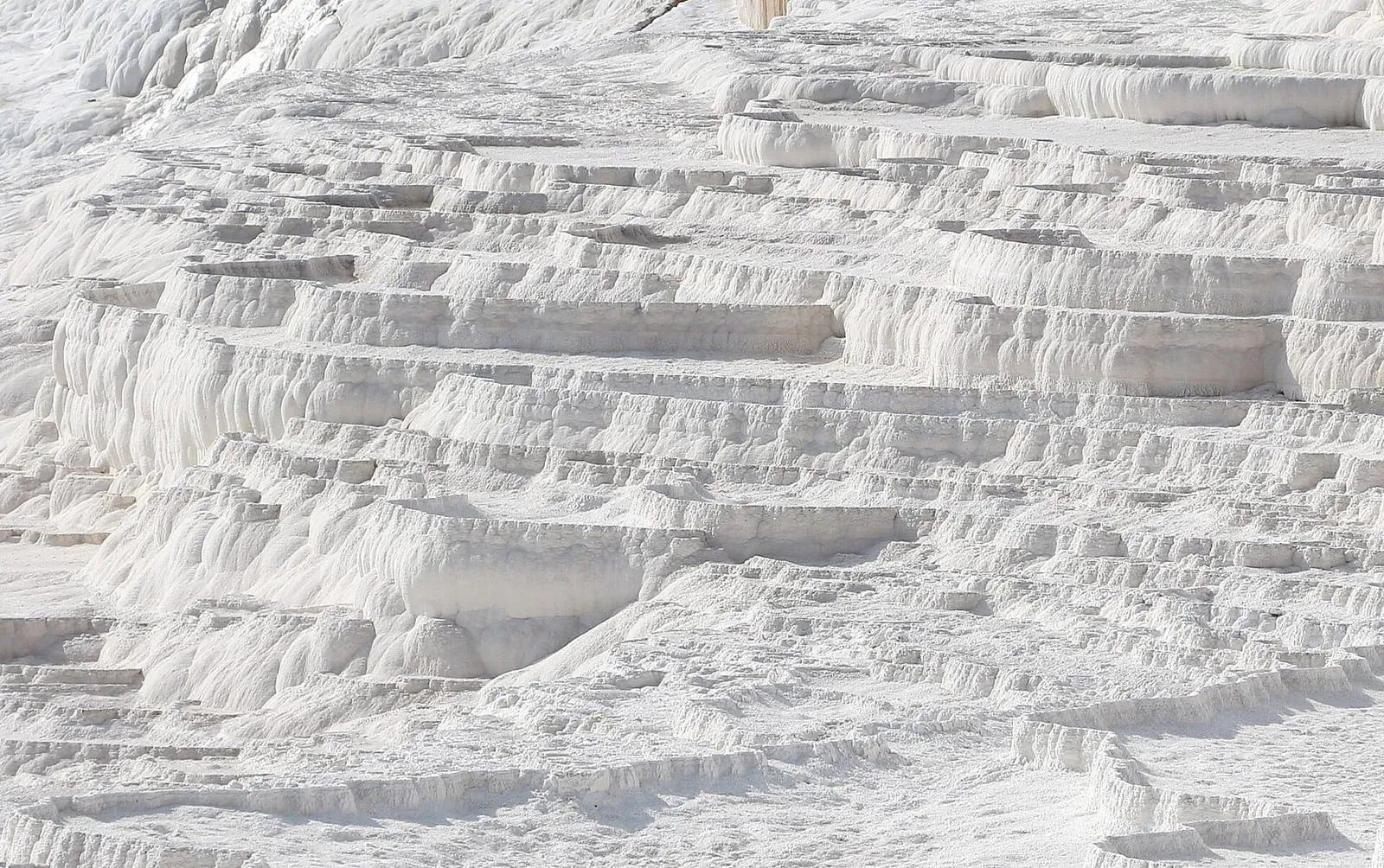
Travertine is a rock that forms when calcium carbonate precipitates out of hot water. These travertines are limestone cliffs that built up slowly over hundreds of thousands of years as mineral springs welled up. Calcite travertine comes out of hotter springs, whereas the more porous tufa forms where the water is cooler.
In the pools and springs of Pamukkale, the water temperature ranges from 19 to 57 degrees Celsius.
Some travertine deposits are ridge-shaped and are split by cracks that run roughly along the top of the ridge. Some travertine deposits have stopped growing; a new fault break cuts through both them and the bedrock nearby.
A huge deposit
Among the largest sections is the Pamukkale plateau, on the northern edge of the Denizli Basin.
Here, white calcite terraces and pools step down the slopes on the raised side of the Pamukkale fault.
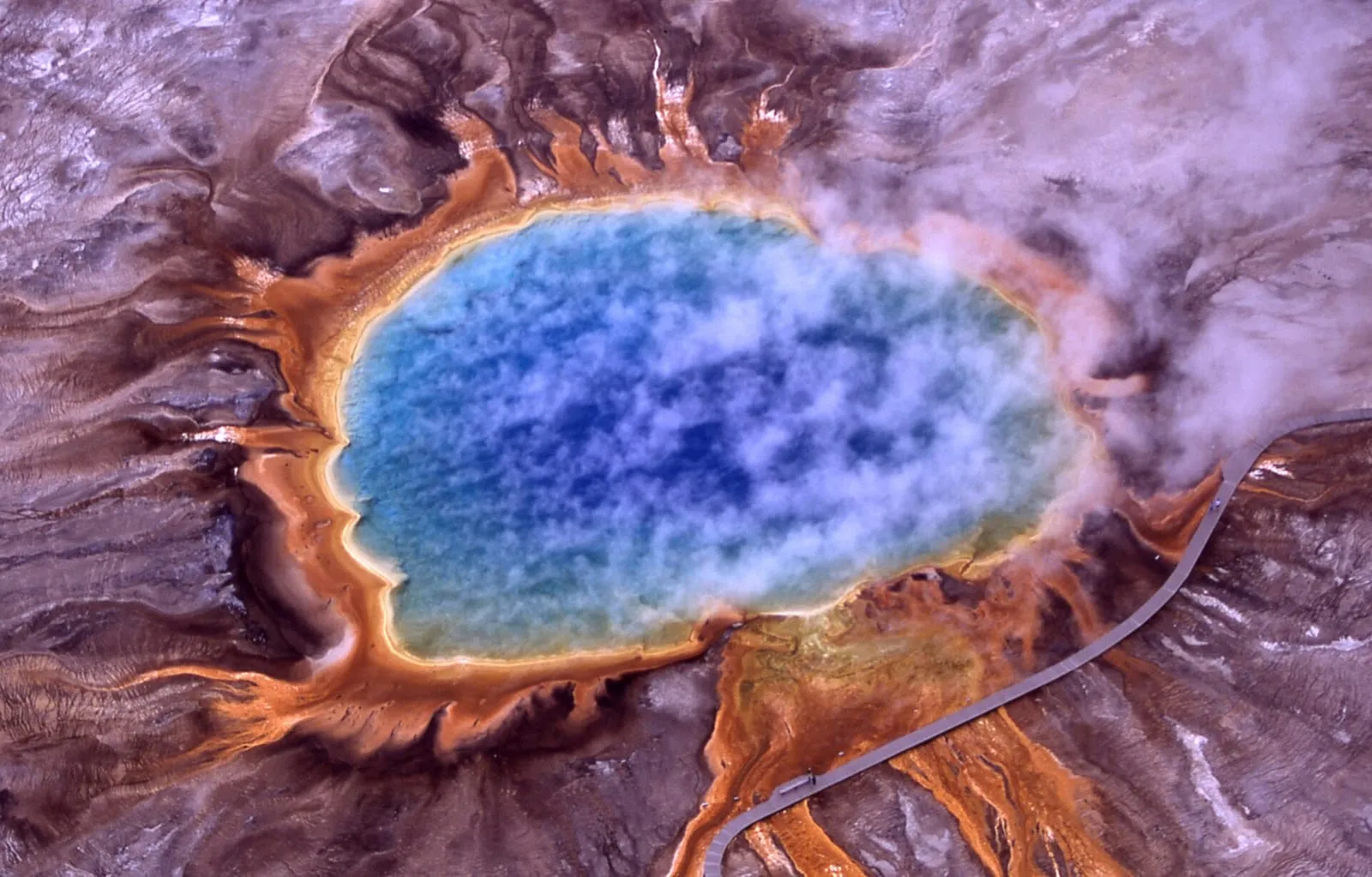
This gleaming mountain of petrified limestone runs down to the valley floor, with frozen stalactites and hundreds of sparkling turquoise pools across it. The name Pamukkale comes from the bright white rocks and means “cotton castle” or “cotton palace”. Other famous travertine sites include Mammoth Hot Springs in the US, in Yellowstone National Park, and Huanglong in China.
How long has it been building up?
Travertine has been building up in this area for hundreds of thousands of years. Most of the build-up at Pamukkale, however, has happened in the last 50,000 years.
Research suggests that today’s hydrothermal and depositional system took shape after the Laodikeia earthquake of the seventh century. The temperature regime has shifted over time too. Dating and geochemical analyses show that water temperatures have fallen since the Pleistocene.
Test yourself
Three questions from the article. Pick an answer to find out.
Question 1 of 3
What heats rainwater underground at Pamukkale?
Rainwater soaks into a network of faults and cracks, and magma deep underground warms it. Source: NASA
Show answer
Right answer: Magma deep below
Rainwater soaks into a network of faults and cracks, and magma deep underground warms it. Source: NASA
Question 2 of 3
What does the name Pamukkale mean?
The name comes from the bright white rocks and means "cotton castle" or "cotton palace". Source: NASA
Show answer
Right answer: Cotton castle
The name comes from the bright white rocks and means "cotton castle" or "cotton palace". Source: NASA
Question 3 of 3
Under what conditions do more porous tufa deposits form?
Calcite travertine comes from hotter springs, whereas the more porous tufa forms where the water is cooler. Source: NASA
Show answer
Right answer: At lower temperatures
Calcite travertine comes from hotter springs, whereas the more porous tufa forms where the water is cooler. Source: NASA