Why does time pass differently in space?
Speed slows time
In this theory, time and space are tied together. Einstein also said the universe has a speed limit: nothing can travel faster than light. In relativity, the faster you travel, the more slowly time passes for you.
One clock stayed on Earth while another was flown on a plane heading in the direction of Earth’s spin. When the plane had gone around the world, scientists compared the two clocks, and the one on the speeding plane had fallen slightly behind the one on the ground.
GPS satellites: two effects at once
GPS satellites circle Earth at roughly 14,000 kilometres per hour. This slows their clocks by a tiny fraction of a second. The satellites also orbit about 20,200 kilometres above the surface, and this speeds their clocks up by a somewhat larger fraction of a second.
The same theory holds that gravity warps space and time and slows the passage of time. At the height of the satellites’ orbit, Earth’s gravity is much weaker, and this makes the satellites’ clocks run faster than clocks on the ground. Put together, the clocks on GPS satellites tick slightly faster than 1 second for every 1 second.
Why do we have to correct for it?
If scientists left the GPS clocks uncorrected, there would be serious trouble: errors would pile up to as much as several miles a day. Fortunately, scientists can correct these time differences with mathematics.
The precision GPS needs means this effect has to be taken into account, otherwise tiny time differences build up fast. The shifts in frequency between clocks on satellites and on the ground, caused by gravity and by motion, are so large that the system would fail unless many relativistic effects were carefully allowed for.
Gravity slows clocks
As Einstein’s theory predicted, a clock sitting in gravity ticks more slowly when seen from a distant region where gravity is weaker. Near a black hole, time dilation is something we can observe: time passes more slowly close to the black hole than far from it. This is because massive objects such as black holes create strong gravitational fields that stretch and bend the fabric of space-time.
On Earth and on the space station
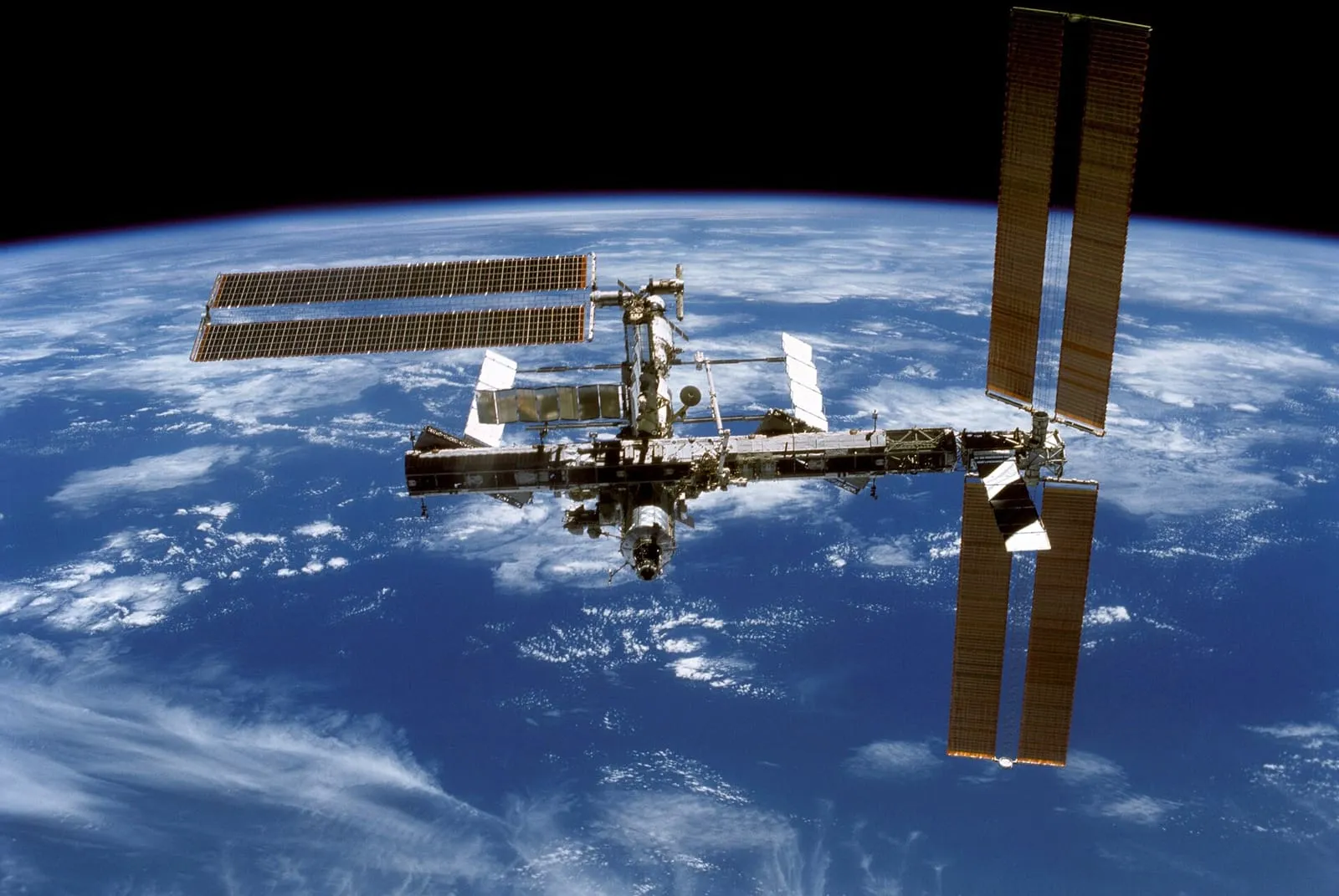
Because of Earth’s gravity, we experience a very small amount of time dilation here as well. It has been seen on aircraft, where clocks in the air run slightly faster than clocks on the ground. The astronauts who live aboard the International Space Station are farther from Earth’s gravity too, so their time runs at a slightly different rate.
As an object approaches the event horizon, it seems to slow down without limit, and in the end it appears completely frozen.
Test yourself
Three questions from the article. Pick an answer to find out.
Question 1 of 3
According to relativity, how do you experience time the faster you move?
The faster you move, the more slowly you experience time. Source: NASA
Show answer
Right answer: More slowly
The faster you move, the more slowly you experience time. Source: NASA
Question 2 of 3
How strong is Earth's gravity at the height where GPS satellites orbit, and what happens to the clocks on them?
Gravity is much weaker at the satellites' height, so GPS satellite clocks run faster than clocks on the ground. Source: NASA
Show answer
Right answer: Much weaker; the clocks run faster than clocks on the ground
Gravity is much weaker at the satellites' height, so GPS satellite clocks run faster than clocks on the ground. Source: NASA
Question 3 of 3
What would happen if the time differences on GPS clocks were not corrected?
Without correction, errors would build up to several miles a day. Source: NASA
Show answer
Right answer: Errors would build up to several miles a day
Without correction, errors would build up to several miles a day. Source: NASA