Why do volcanoes erupt?
Where are volcanoes found?
Most volcanoes in the world sit on plate boundaries, above all in the Pacific Ring of Fire around the Pacific Plate. Tectonic plates touch one another, yet they also move against one another. Movement along faults at plate boundaries can open a convenient path for magma to reach the surface.
Volcanoes do not usually form at transform boundaries. One reason is that there is little or no magma at such a boundary.
How does magma reach the surface?
Volcanoes typically form in three settings: constructive plate boundaries, destructive plate boundaries and hot spots. At constructive boundaries the plates move apart and new crust forms between them. Iceland lies on the Mid-Atlantic Ridge, a constructive plate boundary. As the plates separate, molten rock (magma) rises and erupts as lava.
At destructive boundaries the plates move towards each other, and old crust can be dragged down into the mantle at a subduction zone. Subduction carries sediments full of water into the mantle. The water lowers the melting temperature of the mantle by about 60-100°C. This is how magma is made at depth to feed the volcanoes at the surface.
Volcanoes can also grow far from plate boundaries, above a column of extremely hot magma known as a mantle plume. Far out in the middle of the Pacific Plate, a hot spot has built the Hawaiian Islands, a string of volcanoes.
Why is magma sometimes explosive?
Basaltic magmas rich in iron and magnesium are the most fluid, and magmas rich in silicon are the least fluid. The hotter a magma is, the more fluid it becomes. When fluid basaltic magma reaches the surface, it pours from long cracks or volcanic vents and can be thrown into the air as lava fountains.
Intermediate magmas and those rich in silicon are very sticky. Most of the time they harden inside the vent, which leads to much more explosive eruptions.
What part do gases play?
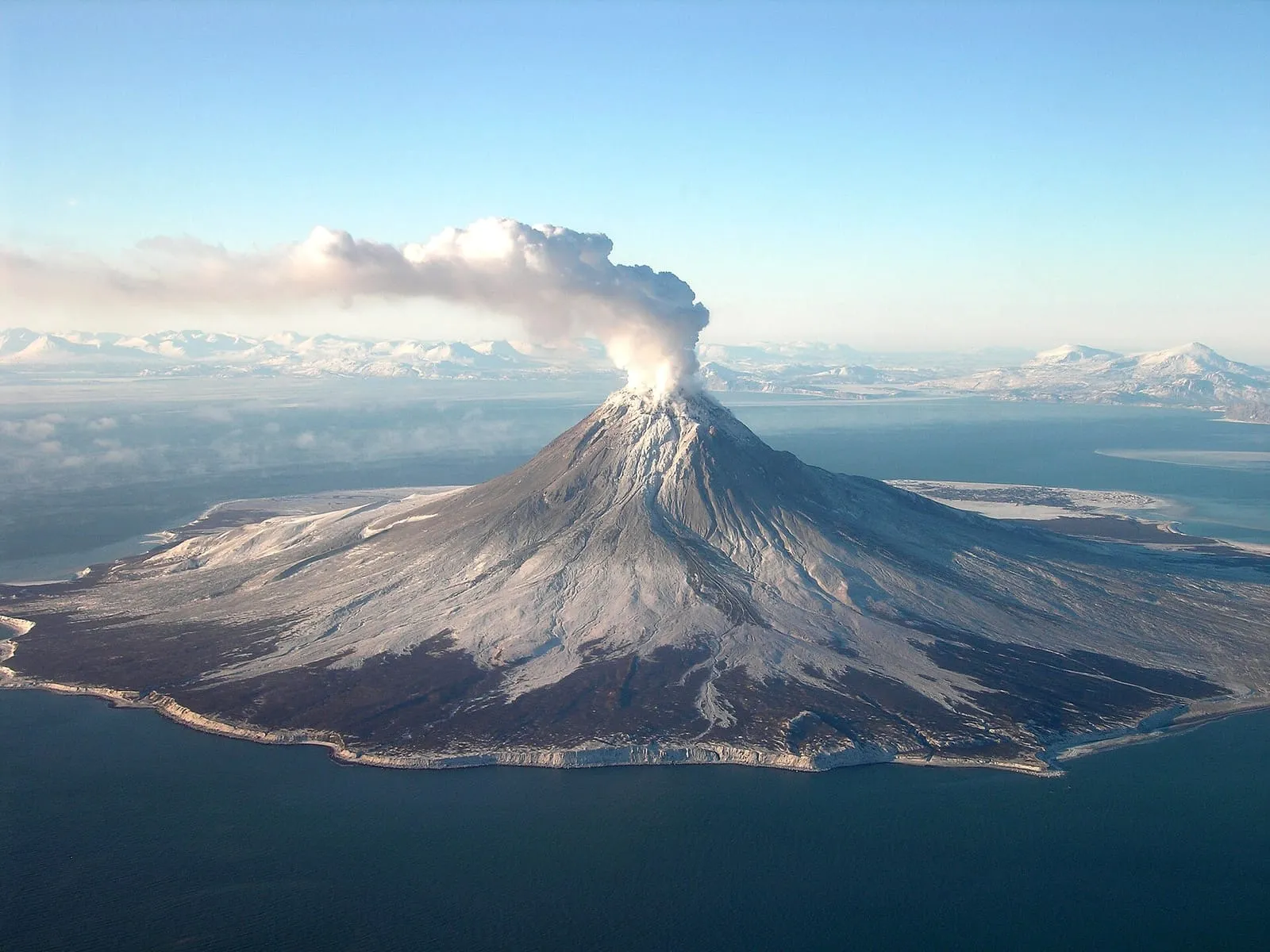
The molten rock beneath a volcano, the magma, carries large amounts of gas that is released to the surface before, during and after eruptions. Water vapour is usually the most plentiful volcanic gas, followed by carbon dioxide and sulfur dioxide.
Big explosive eruptions send water vapour, carbon dioxide, sulfur dioxide, hydrogen chloride, hydrogen fluoride and ash up into the stratosphere. Carbon dioxide, for one, is a greenhouse gas that encourages global warming. Gases such as sulfur dioxide can cause global cooling, damage to the ozone layer and a polluted haze called volcanic smog.
The great eruption of Pinatubo in 1991 lasted about 9 hours and threw out more than a cubic mile of rock. For three years after the Pinatubo eruption, the Earth’s surface cooled by as much as 1.3 degrees (Fahrenheit) at the peak of the effect.
Active, dormant and extinct volcanoes
Most volcanologists regard a volcano or volcanic field that has erupted during the Holocene as active. Being active does not mean that a volcano is erupting at this moment. It means the volcano has a young magma system and, if it is not erupting now, it could in the future.
A dormant volcano is one that is not erupting at present but is still counted as active because it might erupt later. Mount Hood is active but dormant for now, while Kīlauea is active and erupting at present.
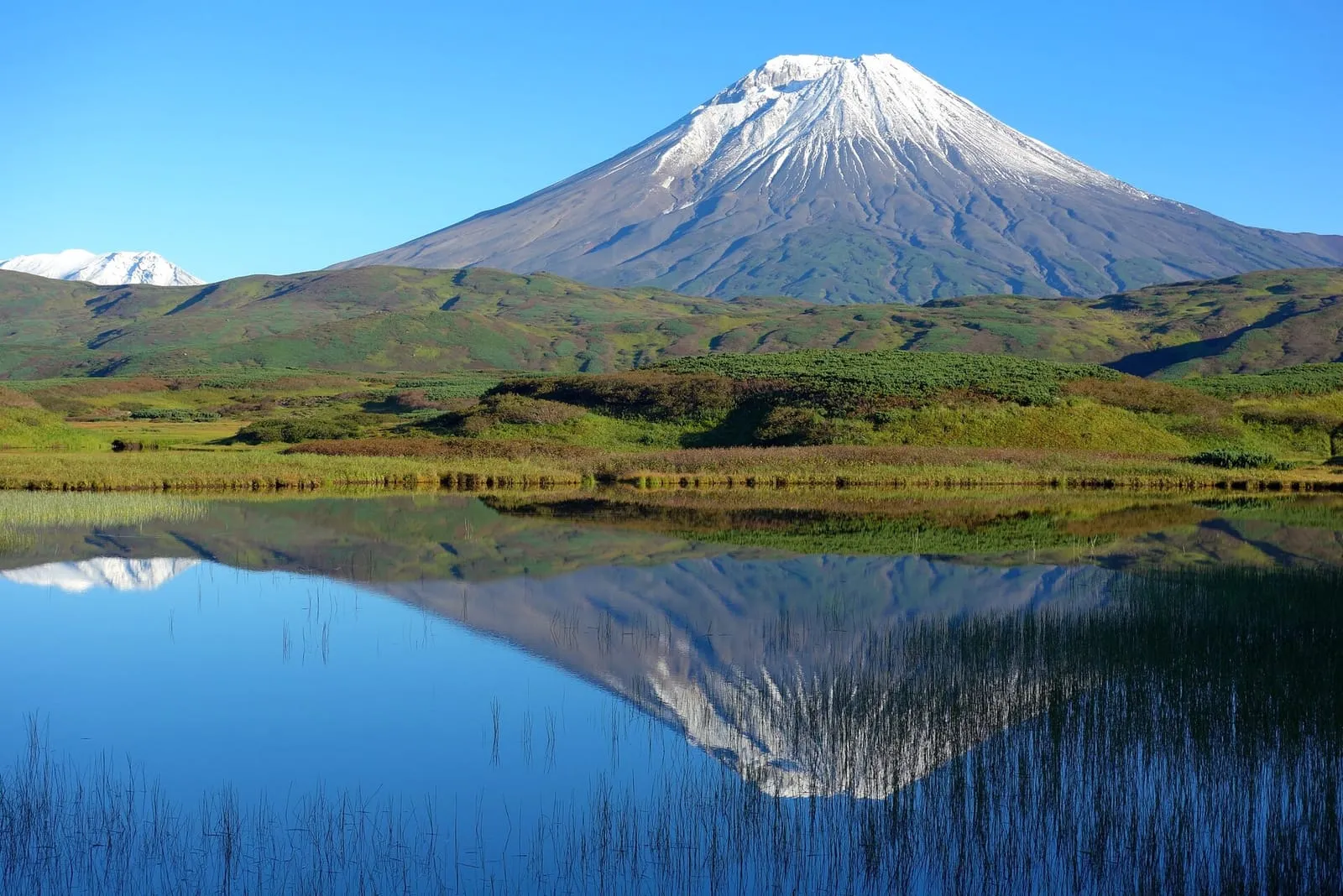
Extinct volcanoes are volcanoes that will never erupt again. Even so, it is not unknown for a volcano thought to be extinct to erupt now and then. Mount Thielsen last erupted about 300,000 years ago.
Test yourself
Three questions from the article. Pick an answer to find out.
Question 1 of 3
By roughly how much does water lower the melting temperature of the mantle?
Water lowers the melting temperature of the mantle by about 60-100°C. Source: British Geological Survey
Show answer
Right answer: About 60-100°C
Water lowers the melting temperature of the mantle by about 60-100°C. Source: British Geological Survey
Question 2 of 3
Which volcanic gas is the most plentiful?
Water vapour is usually the most plentiful volcanic gas, followed by carbon dioxide and sulfur dioxide. Source: pubs.usgs.gov
Show answer
Right answer: Water vapour
Water vapour is usually the most plentiful volcanic gas, followed by carbon dioxide and sulfur dioxide. Source: pubs.usgs.gov
Question 3 of 3
What are extinct volcanoes?
Extinct volcanoes are volcanoes that will never erupt again. Source: USGS
Show answer
Right answer: Those that will never erupt again
Extinct volcanoes are volcanoes that will never erupt again. Source: USGS