Why do comets have tails?
What is a comet?
Chinese astronomers kept detailed records for centuries, including drawings of different types of comet tails. Comets are leftovers from the birth of the Solar System about 4.6 billion years ago, and they are made mostly of ice covered in dark organic material. They have also been called “dirty snowballs”.
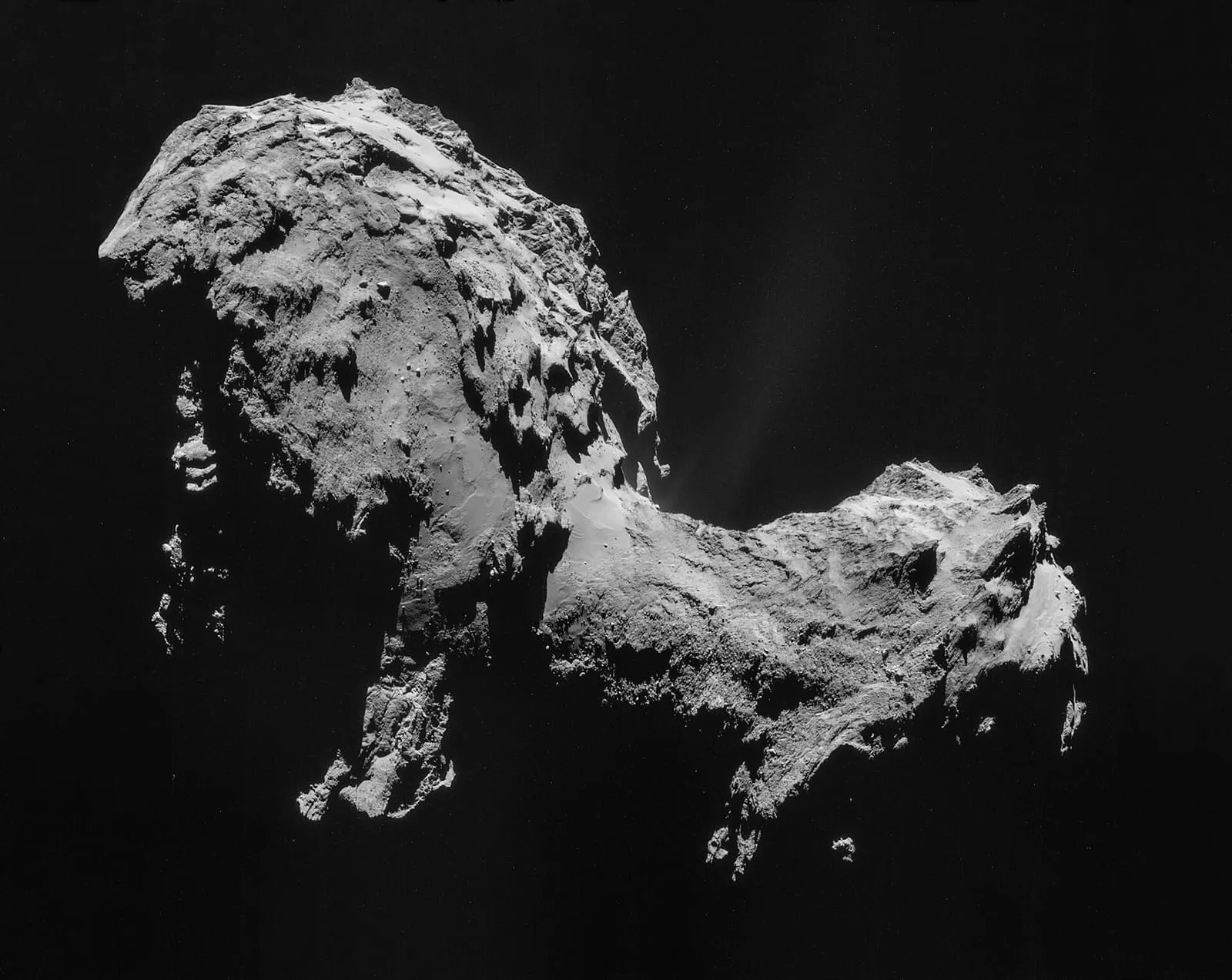
Every comet has a frozen part called the nucleus, which is often only a few miles across. The nucleus holds chunks of ice and frozen gases with bits of dust buried inside.
The coma and how the tail forms
The Sun’s heat turns the comet’s ice into gas, and that is how the coma grows. The coma can stretch for hundreds of thousands of kilometres.
In 2013, comet PanSTARRS showed an “anti-tail” that seemed to point towards the Sun, an effect of the viewing angle from the side. Most comets travel at a safe distance from the Sun; Halley’s Comet, for example, never gets closer than 89 million kilometres. Some comets, known as sungrazers, fly into the Sun or come so close that they break apart and vaporise.
Where do comets come from?
Beyond Neptune lies a disc-shaped belt of icy bodies, first proposed by the astronomer Gerard Kuiper in 1951. Short-period comets, which circle the Sun in less than 200 years, usually arrive when we expect them, since they have passed by before.
In 1950, the astronomer Jan Oort suggested that some comets come from a very distant, spherical shell of icy bodies surrounding the Solar System. This huge swarm, named the Oort Cloud, lies between 5000 and 100,000 astronomical units away.
Most of the less predictable long-period comets come from the Oort Cloud, roughly 100,000 astronomical units from the Sun. One of these comets can take up to 30 million years to make a single trip around the Sun.
How have comets been studied?
In January 2004, NASA’s Stardust mission passed within about 236 kilometres of the nucleus of comet Wild 2. No spacecraft before Stardust had returned with a sample of a comet. Its sample return capsule landed on Earth on 15 January 2006. Studying the Stardust samples hints that comets could be more complex than people first assumed.
In July 2005, the impactor from the Deep Impact mission was released on a planned collision course with the nucleus of comet Tempel 1. Water and organic compounds, which are building blocks of life, may have reached the young Earth aboard comets.
Test yourself
Three questions from the article. Pick an answer to find out.
Question 1 of 3
A comet's tail points away from the Sun. Why?
Sunlight pressure and the solar wind push the coma's dust and gas away from the Sun. Source: NASA
Show answer
Right answer: The pressure of sunlight and the solar wind blow the coma's dust and gas away from the Sun
Sunlight pressure and the solar wind push the coma's dust and gas away from the Sun. Source: NASA
Question 2 of 3
How many tails does a comet actually have?
Comets really have two tails: a dust tail and an ion (gas) tail. Source: NASA
Show answer
Right answer: Two: a dust tail and an ion (gas) tail
Comets really have two tails: a dust tail and an ion (gas) tail. Source: NASA
Question 3 of 3
Comets are leftovers from the birth of the Solar System about how many years ago?
They are remnants from the Solar System's birth some 4.6 billion years back. Source: NASA
Show answer
Right answer: About 4.6 billion years
They are remnants from the Solar System's birth some 4.6 billion years back. Source: NASA