How do bees make honey?
Nectar is collected
Some bees are “forager” bees that gather nectar from flowering plants. Foragers drink the nectar and store it in their crop, also called the honey stomach. The crop is used only for storage; the bee does not digest the nectar at all.
The forager flies back to the hive and, at or close to the entrance, passes the nectar directly from its crop up into the crop of a “processor” bee. A forager usually returns with a load of nectar and shares it among several younger house bees. Splitting nectar into smaller droplets increases the surface area of the same volume, so moisture can start to evaporate.
Enzymes are added in the comb
The processor bee carries the nectar to the honeycomb, which is usually near the top of the hive, and brings it back up into a six-sided wax cell. Each time processor bees do this they add an enzyme called invertase, and it takes many loads of nectar to fill one cell. Each bee also adds the enzyme sucrase from her salivary glands.
Nectar is mostly sucrose (table sugar) and water. Invertase splits sucrose into two simpler sugars: glucose (blood sugar) and fructose (fruit sugar).
Water evaporates
To count as honey, a substance must hold under 18.6 percent water, yet water normally makes up around 70 percent of nectar. Bees have several reasons to process nectar, and they bring its moisture content down to about 18 percent. With most of the water gone, the volume of the resulting honey shrinks greatly, so it needs much less room in the hive than the nectar would. Lowering the moisture content of nectar also stops yeasts from becoming active and keeps the honey from fermenting in the comb.
One way they do this is by fanning their wings, which moves air around the comb and helps water evaporate from the nectar.
Capped and stored
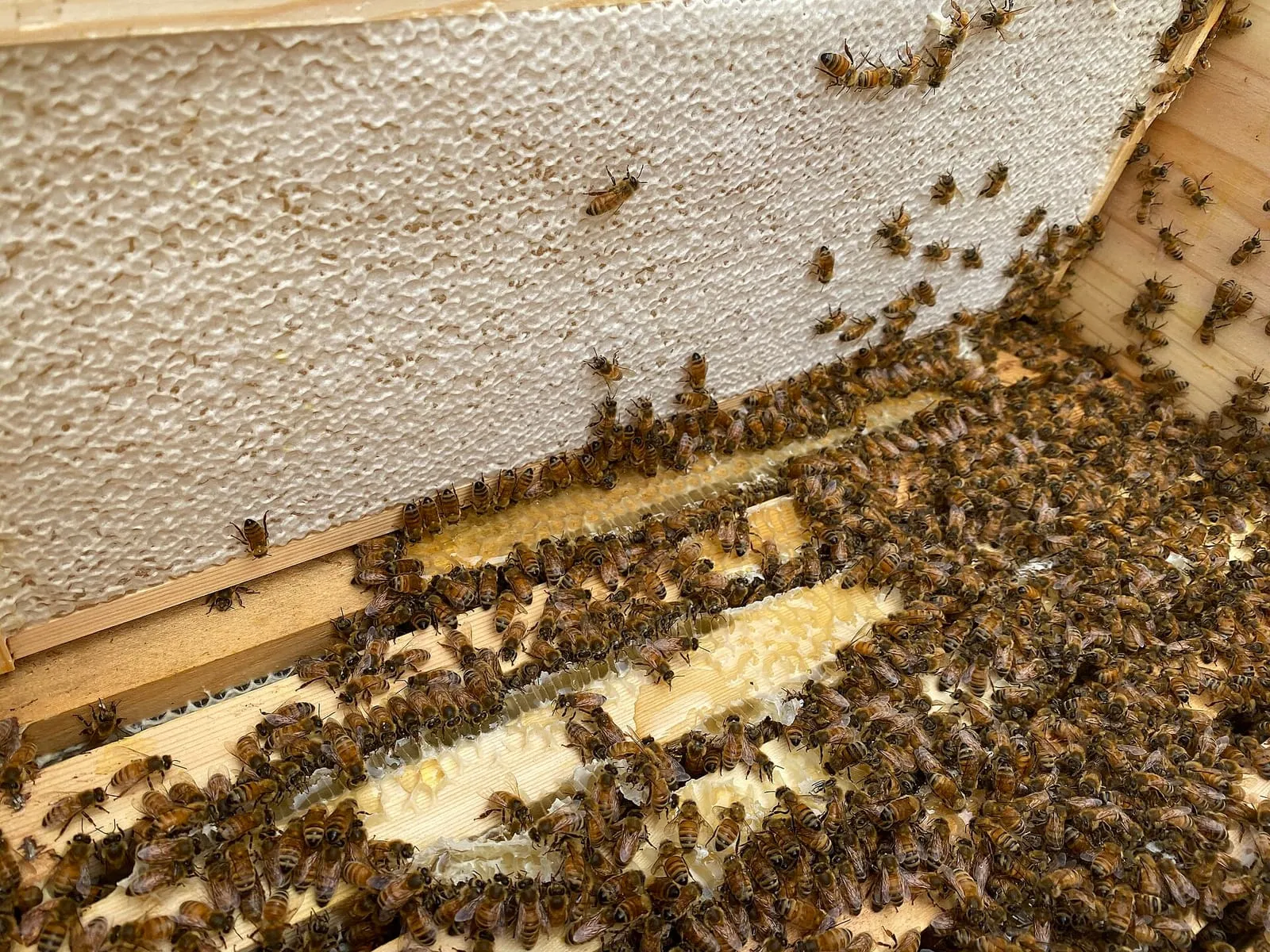
Once nectar has ripened into honey, it holds so little water that no microbes can grow in it. Now the processor bees “cap” the cell, closing it with an airtight seal of wax. When the moisture level has dropped low enough to prevent fermentation (usually below 18.6 percent), the bees cover each cell with a lid made of fresh, clean wax.
If the cap lets air through, the honey takes in moisture from the air and becomes open to bacterial or fungal growth. After the bees have capped the honey, it stays good almost indefinitely. Such a dry environment kills bacteria through reverse osmosis, and honey is also low in pH and carries a little hydrogen peroxide of its own.
Why does honey differ?
Beyond sucrose and water, the nectar of each plant carries different amounts of other sugars and chemicals. Nectars with higher glucose levels tend to crystallise more readily.
Harvest
At harvest, the cell cappings are sliced off with a special knife and the honey is usually extracted by centrifugal force.
Test yourself
Three questions from the article. Pick an answer to find out.
Question 1 of 3
What does a forager bee do with the nectar in her crop?
The crop is used only for storage; the bee does not digest the nectar at all. Source: NC State News
Show answer
Right answer: She only stores it and never digests it
The crop is used only for storage; the bee does not digest the nectar at all. Source: NC State News
Question 2 of 3
Which two sugars does the enzyme invertase split sucrose into?
Invertase splits sucrose into two simpler sugars: glucose (blood sugar) and fructose (fruit sugar). Source: NC State News
Show answer
Right answer: Glucose and fructose
Invertase splits sucrose into two simpler sugars: glucose (blood sugar) and fructose (fruit sugar). Source: NC State News
Question 3 of 3
Why can't microbes grow in ripened honey?
Once nectar has ripened into honey, it holds so little water that no microbes can grow in it. Source: NC State News
Show answer
Right answer: It contains very little water
Once nectar has ripened into honey, it holds so little water that no microbes can grow in it. Source: NC State News