How were the Nazca Lines made?
What are the Nazca Lines?
The Nazca Lines are enormous ground drawings, or geoglyphs, in the Peruvian desert. They are an early form of land art made by pre-Inca peoples between the 4th century BC and the 10th century AD. The Nazca culture created most of the figures between AD 200 and 700.
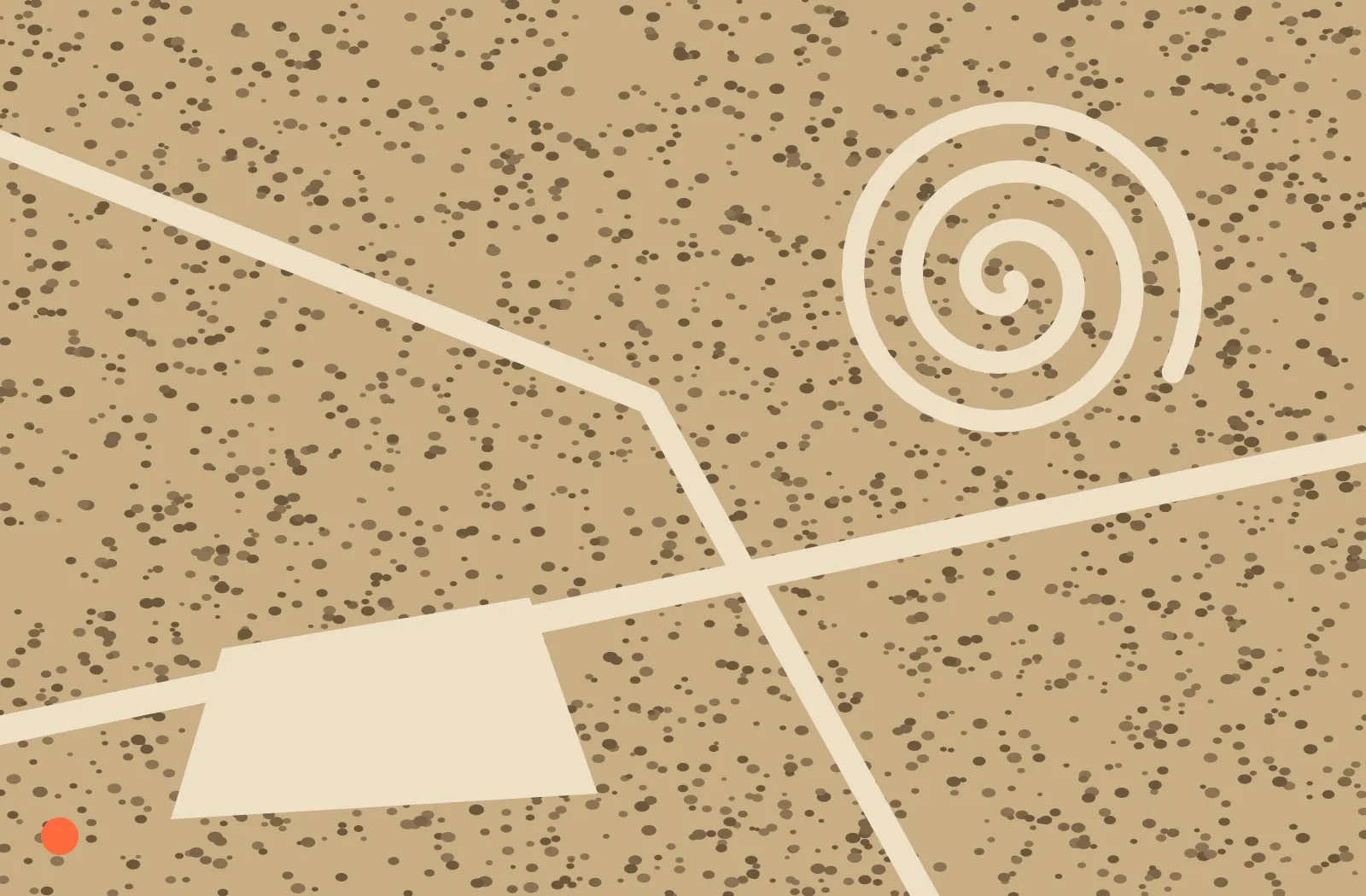
The lines include straight lines up to 30 miles (about 48 kilometres) long. There are also geometric shapes, from triangles to trapezoids and spirals, and about 70 depictions of plants and animals. The Nazca Lines have been on the UNESCO World Heritage list since 1994.
How were the lines made?
Pre-Inca peoples created the lines by removing a layer of rock 12 to 15 inches (about 30–38 centimetres) thick to expose the lighter-coloured sand hidden beneath. Most of the figures stand as a kind of outline, but a few were made by removing the stones inside the shape rather than outside it.
According to scientists, the animal figures were made by digging hollows in the desert floor and leaving the coloured soil exposed.
Two kinds of figures
A distinction is made between giant line-type figures and smaller relief-type figures, which are very hard to spot. Relief-type figures mostly show people or things altered by people, for example domesticated animals and severed heads (81.6 percent). Line-type figures, by contrast, mostly show wild animals (64 percent).
Researchers think relief-type figures were most likely made and viewed by individuals or small groups. The same study suggests that line-type figures were most likely made and used by whole communities for ritual activities.
New discoveries
About 430 figurative Nazca geoglyphs were discovered over roughly a century. An artificial intelligence system helped find 303 new figurative geoglyphs in just 6 months of fieldwork. Combining artificial intelligence with low-flying drones has transformed the pace of geoglyph discovery.
According to Johny Isla, a drone can survey an area of several kilometres in a day. The newly discovered figures are three to seven metres wide, which is why they went unnoticed on earlier flights. According to Johny Isla, between 80 and 100 new figures have emerged in the Nazca and Palpa valleys in recent years, all of them predating the Nazca culture.
What were they made for?
Paul Kosok and María Reiche suggested that the lines served an astronomical and calendrical purpose. John Reinhard, on the other hand, suggested that the lines led to places where rituals for water and crop fertility were held.
According to a study of the bird geoglyphs, most of the birds in question had previously been misidentified. Of the 16 geoglyphs examined, three were reclassified.
A cat figure
The cat figure came to light during work to improve access to one of the viewing hills. The cat is 37 metres long, and its lines range from 30 to 40 centimetres in width. It was made in the late Paracas period (500 BC–AD 200).
The figure was almost invisible, and because it sits on a steep slope it was close to being erased by natural erosion. It was cleaned and preserved.
Test yourself
Three questions from the article. Pick an answer to find out.
Question 1 of 3
Which statement about how the Nazca figures were made is correct?
Pre-Inca peoples created the lines by removing a layer of rock 12 to 15 inches (about 30–38 centimetres) thick to expose the lighter-coloured sand hidden beneath. Source: Smithsonian Magazine
Show answer
Right answer: The surface layer of rock was removed to reveal the lighter-coloured sand beneath
Pre-Inca peoples created the lines by removing a layer of rock 12 to 15 inches (about 30–38 centimetres) thick to expose the lighter-coloured sand hidden beneath. Source: Smithsonian Magazine
Question 2 of 3
What do the giant line-type figures mostly show?
Line-type figures, by contrast, mostly show wild animals (64 percent). Source: Proceedings of the National Academy of Sciences
Show answer
Right answer: Wild animals
Line-type figures, by contrast, mostly show wild animals (64 percent). Source: Proceedings of the National Academy of Sciences
Question 3 of 3
Which period does the cat figure belong to?
The cat figure was made in the late Paracas period (500 BC–AD 200). Source: The Guardian
Show answer
Right answer: The late Paracas period
The cat figure was made in the late Paracas period (500 BC–AD 200). Source: The Guardian