How was mummification done in ancient Egypt?
How did mummification begin?
According to traditional theories, in prehistory bodies dried out naturally under the action of hot, dry desert sand. According to a study published in 2014, the origins of mummification reach back 1,500 years further than previously thought.
Researchers found complex embalming substances in the linen wrappings of bodies from tombs whose origin is securely established. They identified a pine resin, an aromatic plant extract, a plant gum or sugar, a natural source of petroleum and a plant oil or animal fat in the wrappings. They amounted to elaborate, processed recipes built from the same natural products, in much the same proportions, that were used when Pharaonic mummification was at its height.
The most elaborate method
From the New Kingdom until the start of the Late Period, roughly 1550 to 664 BCE, one technique was used to mummify kings and high officials. This technique is regarded as the finest and most elaborate mummification process. The Egyptians cracked the secret around 2600 BCE by removing the internal organs, where decay really begins.
The internal organs
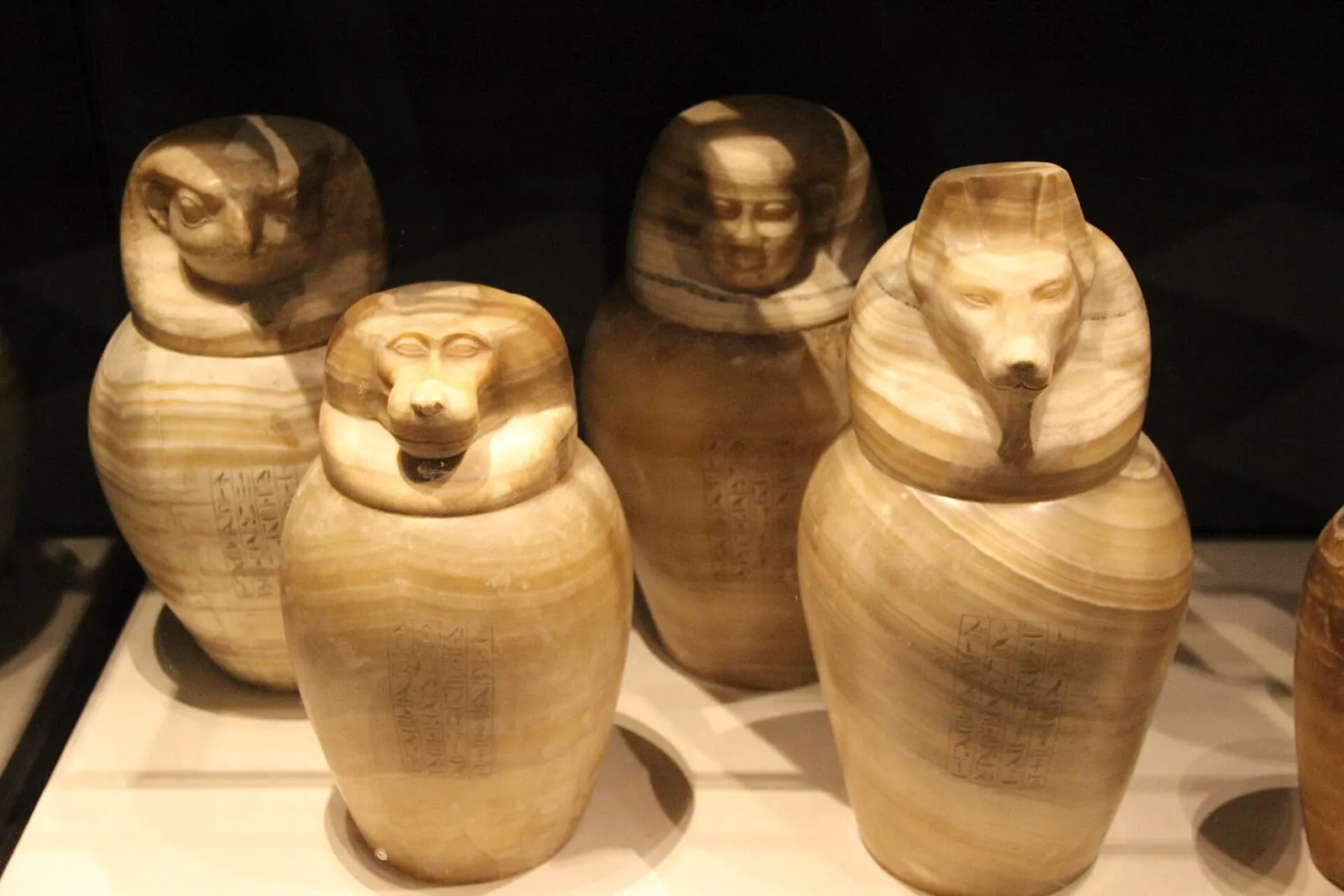
The first step in this technique was to remove most of the internal organs and preserve them. Each of the lungs, stomach, liver and intestines was embalmed on its own and put into a canopic jar. Embalming and storing the organs like this was something that generally only rich people could pay for. The custom shifted after about 1000 BCE: the organs were generally wrapped and returned to the body or tied to it, or else stored in boxes rather than jars.
The brain and the heart
The top-of-the-range version generally had the brain drawn out through the nose and the intestines removed, after which the hollowed body was dried with salts. The heart, which stood for the centre of all knowledge and emotion, was usually left untouched inside the body, while the brain was mostly thrown away.
Drying with natron
Next the body was packed in natron, a carbonate salt gathered along the shores of desert lakes, which dried the body by drawing the water out of it. In mummification, natron crystals were packed around and inside the body. Once the body had dried out, no more decay took place.
While the body was covered in natron, it was left on a sloping table called an “embalming bed”. The slope of the table let fluids drip into a container as the corpse dried.
Wrapping, and how long it took
Once 40 days had passed, the natron was cleared from the skin and the cavities of the body were stuffed with linen, little bags of natron, herbs, sawdust, sand or chopped straw. The skin and the first few layers of linen bandage were then covered with a resin coating. The rest of the body was wrapped next, often with amulets included and with a mask placed over the mummy’s head.
Next, the dried skin was treated with elaborate mixtures of oils and resins. From start to finish it took about 70 days. An estate manager named Wah (around 2000 BCE) was wrapped in 375 square metres of cloth.
Not everyone could be mummified
The wealthy were artificially mummified and placed in specially built tombs, while most people were buried in hollows in the sand. They, too, were mummified by natural means: corrosive body fluids drained away into the hot, dry sand, and the sand dried out and preserved their skin, hair and nails. The bodies of those who could not afford mummification were generally “preserved” by drying in hot desert sand or by coating them in resin.
Test yourself
Three questions from the article. Pick an answer to find out.
Question 1 of 3
About how long did the most elaborate mummification process take?
The whole process took roughly 70 days. Source: The Australian Museum
Show answer
Right answer: About 70 days
The whole process took roughly 70 days. Source: The Australian Museum
Question 2 of 3
After how many days was the natron removed from the body?
After 40 days the natron was taken off the skin and the body cavities were packed with various materials. Source: The Australian Museum
Show answer
Right answer: After 40 days
After 40 days the natron was taken off the skin and the body cavities were packed with various materials. Source: The Australian Museum
Question 3 of 3
What was usually done with the heart during mummification?
The heart was generally left in place inside the body, while the brain was mostly discarded. Source: The Australian Museum
Show answer
Right answer: It was usually left untouched inside the body
The heart was generally left in place inside the body, while the brain was mostly discarded. Source: The Australian Museum