Why is Venus the hottest planet in the Solar System?
What kind of planet is Venus?
Venus orbits second from the Sun and lies nearer to Earth than any other planet. It is similar to Earth in structure and size, and it is sometimes called Earth’s evil twin.
Venus is about 12,104 kilometres across at the equator, compared with 12,756 kilometres for Earth. It orbits the Sun at an average distance of 108 million kilometres. It takes sunlight roughly six minutes to reach Venus from the Sun.
Why is it so hot and crushing?
Venus combines fierce heat, enormous air pressure and clouds of corrosive acid. Beneath its dense, lasting clouds, the surface has volcanoes and deformed mountains.
One research team concluded that the interior of Venus is too dry today for there to have been enough water for oceans on its surface. According to the same team, the planet may have been a scorching, uninhabitable world for its whole history.
On both planets, an iron core is wrapped in a mantle of hot rock, with a thin rocky crust on the outside. NASA’s Magellan spacecraft mapped the scorching surface of Venus with radar during a five-year mission that ended in 1994. What Magellan found was heavy volcanism, a fairly young surface and high mountain chains. The air pressure at the surface presses down as hard as being under water deeper than 930 metres on Earth.
Between 1961 and 1984, the Soviet Union sent a series of probes to Venus under its Venera programme. Ten probes reached the surface, and a few kept working briefly after landing. The longest-lived lasted two hours and the shortest 23 minutes. The photographs they took show a bare, dim and rocky landscape.
Days and seasons on Venus
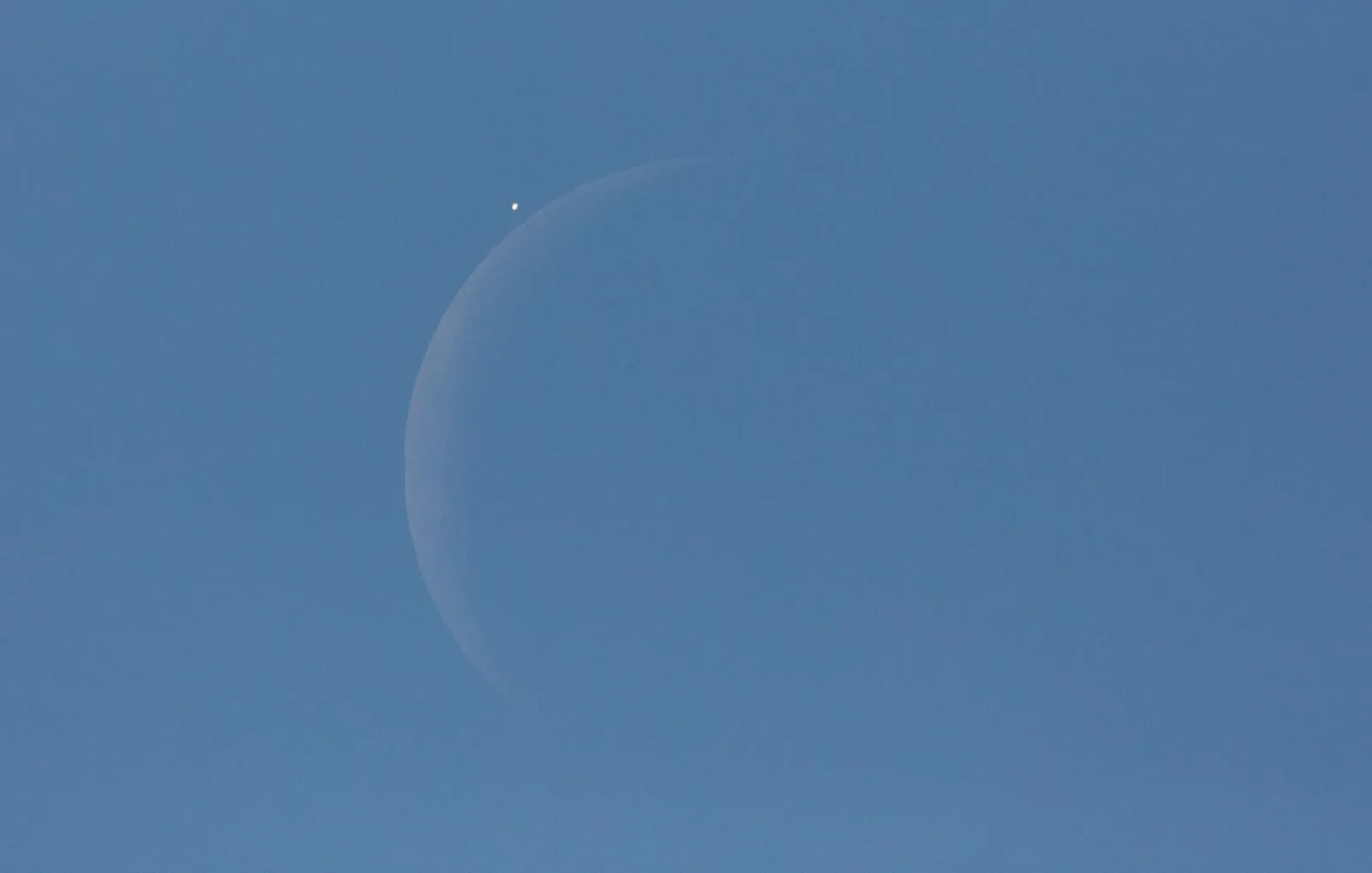
A day on Venus lasts 243 Earth days, which is even longer than its year of 225 Earth days. On Venus, the Sun takes 117 Earth days to go from sunrise to sunset.
Because Venus spins in the opposite direction to Earth, the Sun rises in the west and sets in the east there. The tilt of Venus’s axis is only three degrees, too small to produce distinct seasons.
Could there be life in the clouds?
About 50 kilometres above the surface of Venus, the temperature is between 30 and 70 degrees Celsius. That range could suit Earth life such as “extremophile” microbes. Even so, none of the findings gives convincing evidence of life in the clouds of Venus.
Test yourself
Three questions from the article. Pick an answer to find out.
Question 1 of 3
About how hot is the surface of Venus, in degrees Celsius?
Surface temperatures on Venus are high enough to melt lead, at roughly 467 degrees Celsius. Source: NASA
Show answer
Right answer: About 467 degrees
Surface temperatures on Venus are high enough to melt lead, at roughly 467 degrees Celsius. Source: NASA
Question 2 of 3
From which direction does the Sun rise on Venus?
Venus spins in the opposite direction to Earth, so the Sun rises in the west and sets in the east. Source: NASA
Show answer
Right answer: The west
Venus spins in the opposite direction to Earth, so the Sun rises in the west and sets in the east. Source: NASA
Question 3 of 3
About how many Earth days does one day (one full rotation) on Venus last?
One Venus day lasts 243 Earth days, longer even than the Venus year of 225 Earth days. Source: NASA
Show answer
Right answer: About 243 Earth days
One Venus day lasts 243 Earth days, longer even than the Venus year of 225 Earth days. Source: NASA