What causes auroras?
Northern lights, southern lights
Auroras seen near the North Pole are called the aurora borealis, or northern lights. Near the South Pole, they are called the aurora australis, or southern lights. In Latin, “aurora” means “dawn”, and it is also the name of the Romans’ goddess of the dawn. For Europeans who lived well away from the Arctic Circle, auroras usually appeared as a faint red glow in the northern sky, much like the reddish light of dawn.
It all starts with the Sun
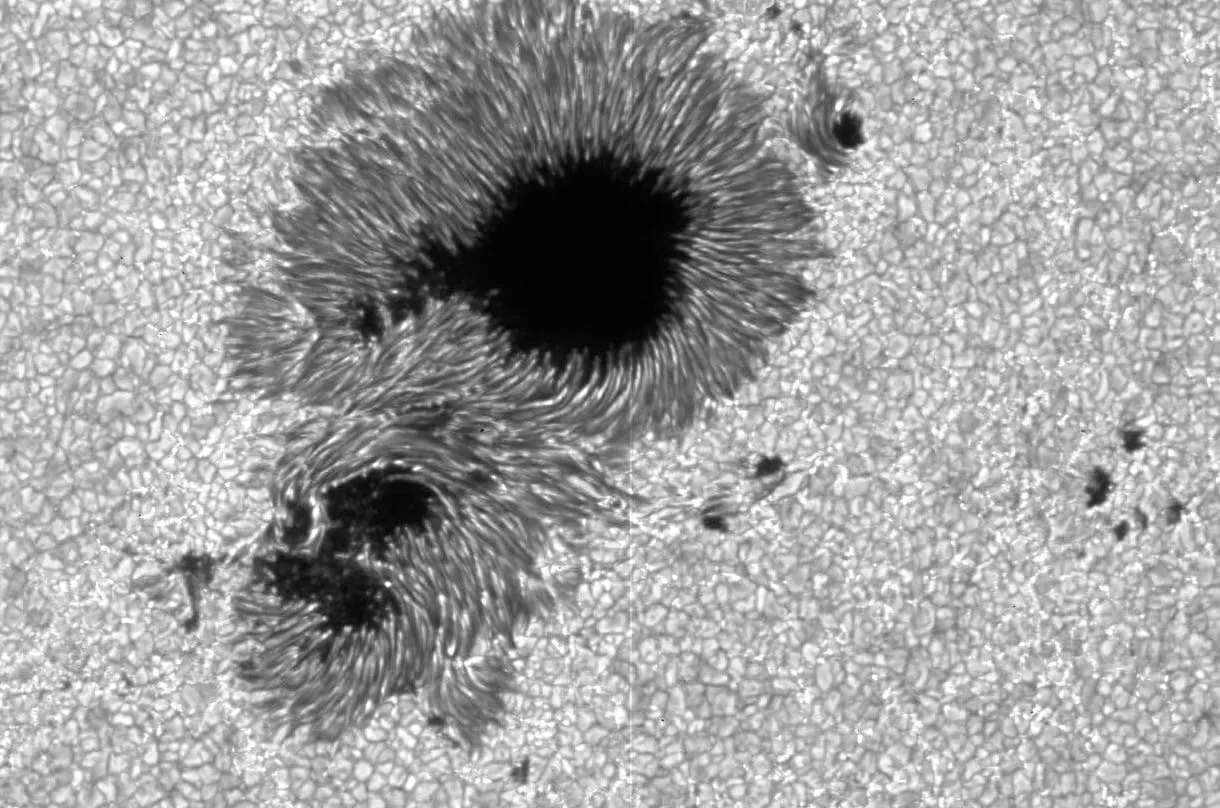
The Sun is always releasing a flow of charged particles into the Solar System; this flow is called the solar wind. Earth’s protective magnetic field keeps most of this energy and these particles away from us. On reaching Earth, the solar wind can interact with this magnetic shield and store up energy in it. Once this stored energy is let go, a large share of it pours down into our atmosphere and produces auroras.
The Sun does not send out the same amount of energy all the time: alongside the steady solar wind, there are also solar storms. One type of solar storm is the coronal mass ejection, in which the Sun throws off an enormous bubble of electrified gas able to cross space at high speed.
How is the light produced?
Electrons gain energy as they are accelerated in the tail of Earth’s magnetosphere on its night side, and along auroral field lines. In collisions in the upper atmosphere, the electrons pass their energy on to atoms and molecules, raising them to higher energy levels. When the atoms and molecules drop back to lower energy levels, they release this energy as light. This is similar to the way a neon light works.
Auroras usually form between 80 and 500 km above Earth’s surface. Protons also produce auroras, but these are faint and diffuse and usually not easy to see with the naked eye.
Where do the colours come from?
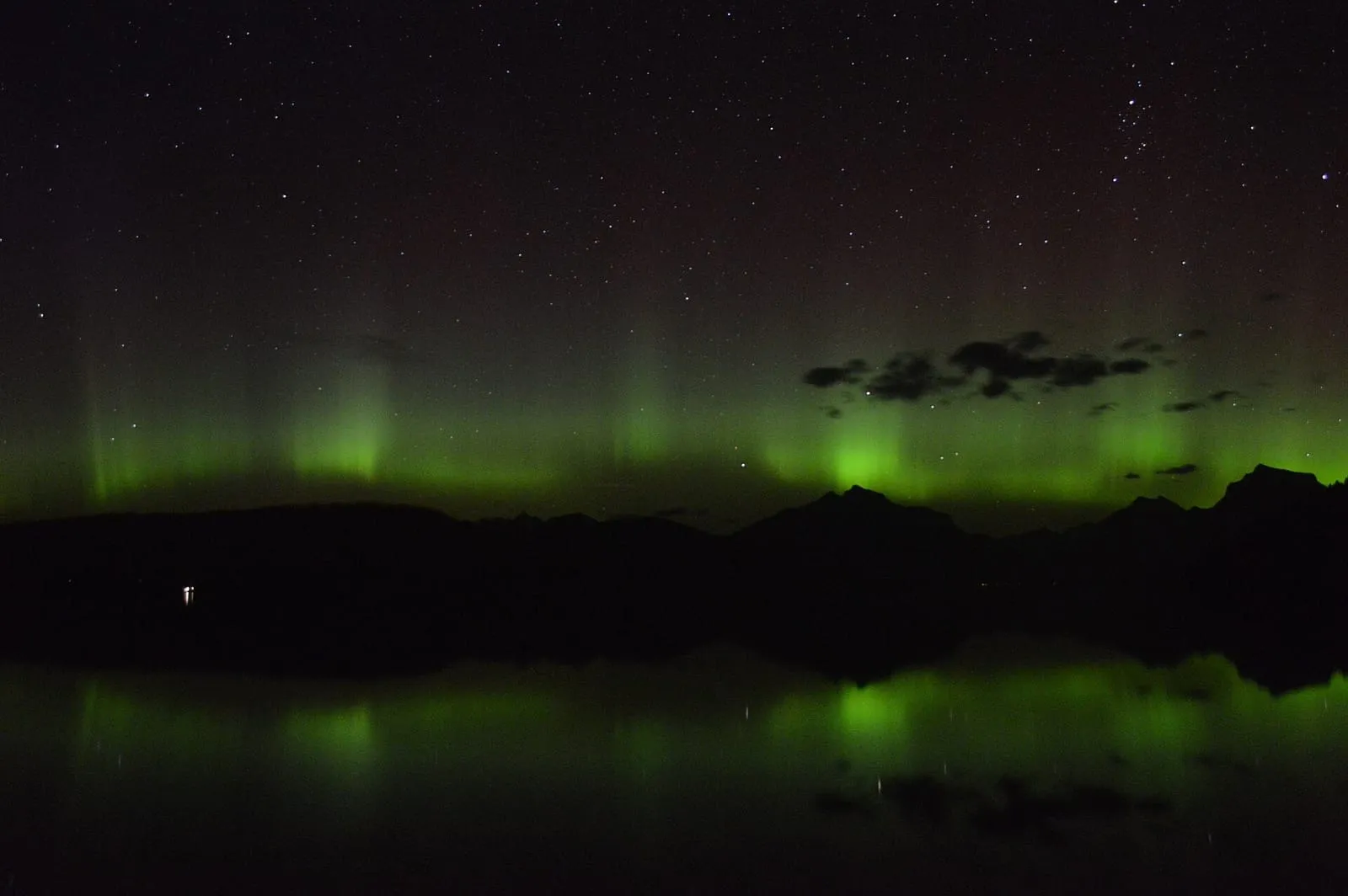
The most common colour is green, produced when oxygen is excited by electrons about 100 km above Earth’s surface. Green light from excited oxygen forms at roughly 100–200 km, while red light forms above 200 km. Excited nitrogen at about 100–200 km gives off blue light. When the nitrogen lies lower than 100 km, the bottom edge of the aurora takes on a colour ranging from reddish-purple to pink. Sometimes the light given off by these gases mixes, making auroras look purple, pink or even white.
Lights that ripple like curtains
Auroras are often made up of tall rays that look like a curtain made of folds of cloth. In the evening, these rays can form arcs stretching from horizon to horizon. Towards midnight, the arcs begin to twist and sway, as if a wind were blowing on curtains of light. At some point the arcs may spread to fill the whole sky, moving quickly and becoming very bright. This marks the high point of an event known as an auroral substorm.
Towards morning, auroras can take on a more cloud-like appearance. These diffuse patches can blink on and off for hours, then disappear as the Sun rises in the east.
Where and when can they be seen?
Because of the way Earth’s magnetic field steers the electrons, auroras form two ovals around the magnetic poles. The best place to see them is under an oval-shaped region between latitudes of about 60 and 75 degrees, north and south. At these latitudes, auroras can be seen on more than half of the nights in a year. During major geomagnetic storms, these ovals expand away from the poles. During large events, auroras can be seen as far south as the US, Europe and Asia.
To see them, the sky must be clear and free of cloud. It must also be dark, so at auroral latitudes the midnight sun prevents viewing during the summer months.
Do other planets have auroras?
Auroras can also form on other planets and moons that have atmospheres. They usually occur where a planet’s magnetic field lines meet its atmosphere, and they have been seen on Saturn and Jupiter. In 1979, the Voyager 1 spacecraft spotted auroras on the dark side of Jupiter. MAVEN found auroras on Mars, and Pioneer found them on Venus.
Test yourself
Three questions from the article. Pick an answer to find out.
Question 1 of 3
At what height above the ground do auroras usually form?
Auroras usually form between 80 and 500 km above the ground. Source: NOAA Space Weather Prediction Center
Show answer
Right answer: Between 80 and 500 km
Auroras usually form between 80 and 500 km above the ground. Source: NOAA Space Weather Prediction Center
Question 2 of 3
What is the most common aurora colour?
Green is the most common colour; it appears about 100 km up, when electrons excite oxygen. Source: NASA
Show answer
Right answer: Green
Green is the most common colour; it appears about 100 km up, when electrons excite oxygen. Source: NASA
Question 3 of 3
Between which latitudes is the best place to see auroras?
The best viewing spot is the oval-shaped zone between about 60 and 75 degrees of latitude, in both the north and the south. Source: NOAA Space Weather Prediction Center
Show answer
Right answer: Between about 60 and 75 degrees
The best viewing spot is the oval-shaped zone between about 60 and 75 degrees of latitude, in both the north and the south. Source: NOAA Space Weather Prediction Center