How do day and night happen?
Why do we get day and night?
The Sun appears to travel across the sky, rising in the east in the morning, climbing towards the south at noon and sinking in the west as the day ends. The ancient Greeks believed the Sun crossed the sky in a chariot pulled by four white horses. The light from the Sun takes about eight minutes to reach Earth.
How fast does Earth spin?
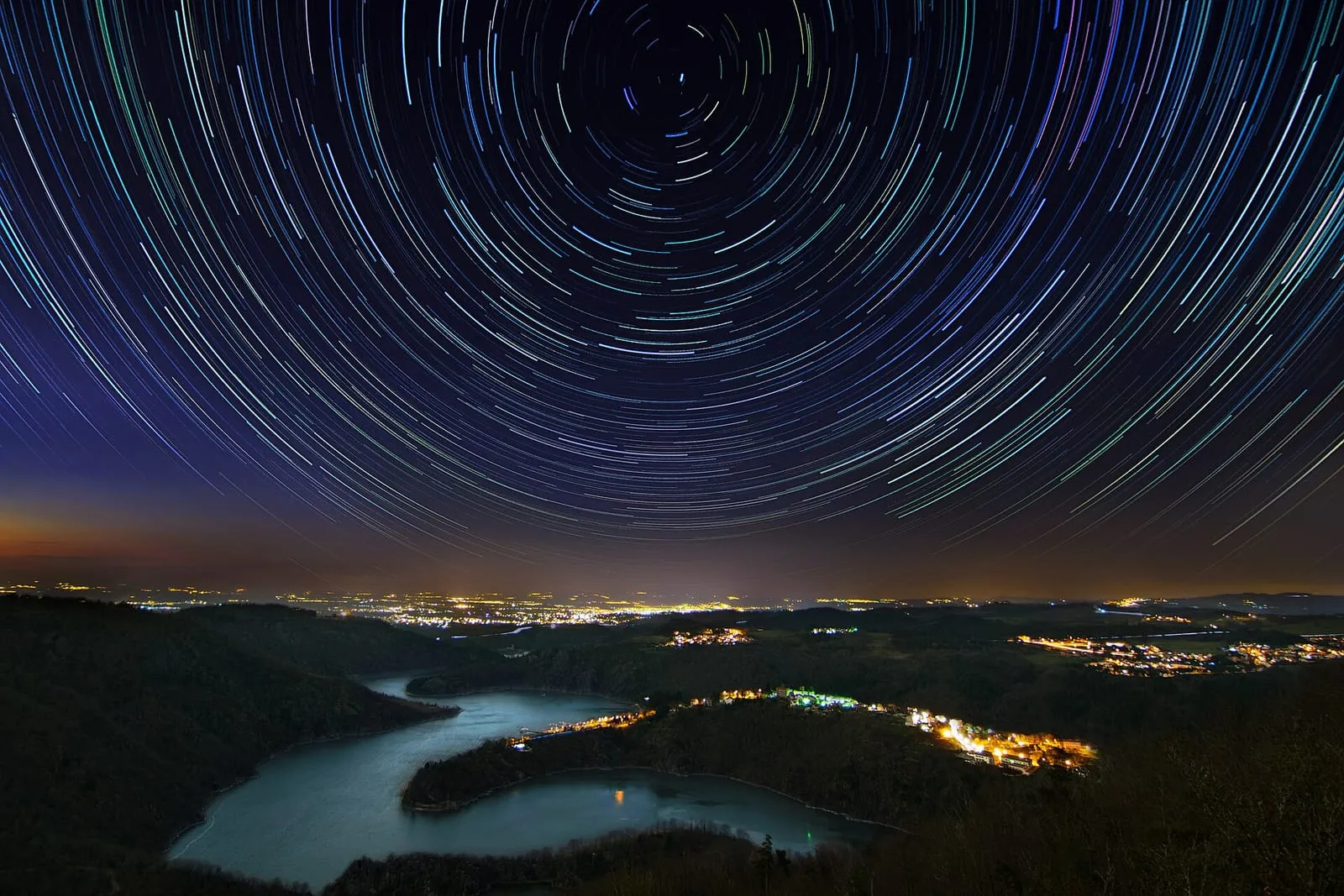
As Earth travels around the Sun, it also turns once on its own axis every 23.9 hours. At the equator, the surface moves at about 2200 kilometres per hour. Luckily, people cannot feel this motion.
How long is a day?
When we say “a day”, we usually mean one cycle of daylight and darkness, which is called a solar day. On Earth a solar day lasts about 24 hours. Because Earth’s orbit is an ellipse, some solar days run a few minutes longer than 24 hours and some a few minutes shorter.
Another way to measure a day is to time how long a planet takes to spin all the way round once. On Earth, this length, known as the sidereal day, is almost exactly 23 hours and 56 minutes.
One trip around the Sun takes 365.25 days. Every four years an extra day is added, and this extra day is called a leap day.
Earth’s tilt
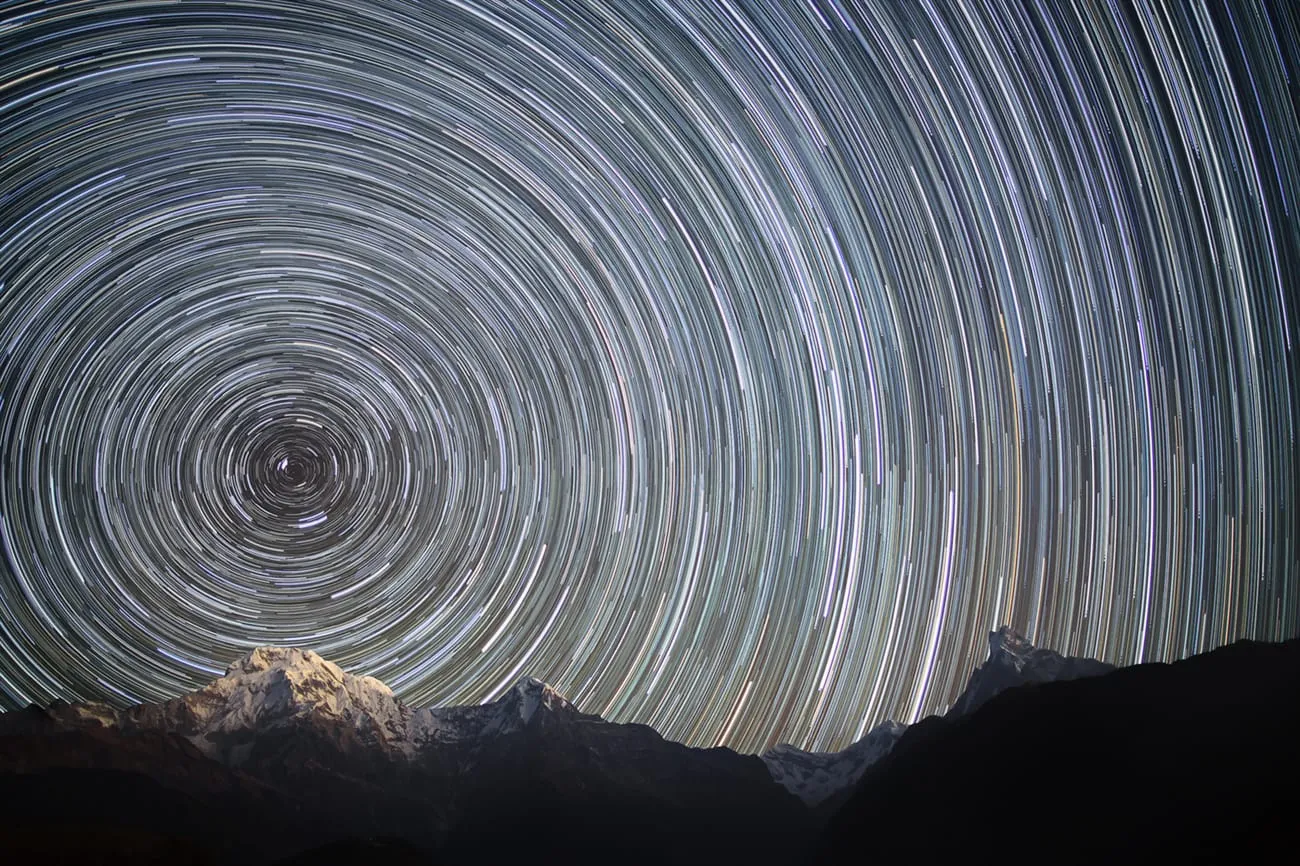
Earth’s axis of rotation is tilted by 23.4 degrees relative to the plane of its orbit around the Sun. This tilt gives us our yearly cycle of seasons. For part of the year the northern hemisphere leans towards the Sun and the southern hemisphere leans away.
When the Sun is higher in the sky, its heating is stronger in the north, and summer arrives there. Less direct sunlight brings winter to the south.
Days on other planets
Gas giants spin very fast. Mars completes one turn in 25 hours. Jupiter completes one in just 10 hours. On Mercury and Venus, days last thousands of hours: a day on Mercury is 1408 hours long, and on Venus it is 5832 hours.
Does Earth always spin at the same speed?
According to a 2004 news report, Earth’s spin tends to slow down overall, because the Moon’s gravity pulls on its seas and continents. Because of this slowing, physicists had added 22 separate leap seconds since 1972, up to the date of the report. The same report says the huge earthquake in the Indian Ocean in December 2004 shortened Earth’s day by about three microseconds. The cause was mass shifting towards the planet’s centre. It is compared to the way a spinning figure skater speeds up when pulling their arms in to their body.
Test yourself
Three questions from the article. Pick an answer to find out.
Question 1 of 3
By how many degrees is Earth's axis of rotation tilted relative to its orbital plane?
The tilt of Earth's spin axis against its orbital plane is 23.4 degrees. Source: NASA
Show answer
Right answer: 23.4 degrees
The tilt of Earth's spin axis against its orbital plane is 23.4 degrees. Source: NASA
Question 2 of 3
About how long is a sidereal day on Earth?
A sidereal day on Earth is almost exactly 23 hours and 56 minutes. Source: NASA
Show answer
Right answer: 23 hours 56 minutes
A sidereal day on Earth is almost exactly 23 hours and 56 minutes. Source: NASA
Question 3 of 3
Why does the Sun appear to move across the sky?
The Sun's motion is an appearance caused by Earth spinning on its own axis. Source: NASA
Show answer
Right answer: Earth spins on its own axis
The Sun's motion is an appearance caused by Earth spinning on its own axis. Source: NASA