Are bats blind?
Verdict: false
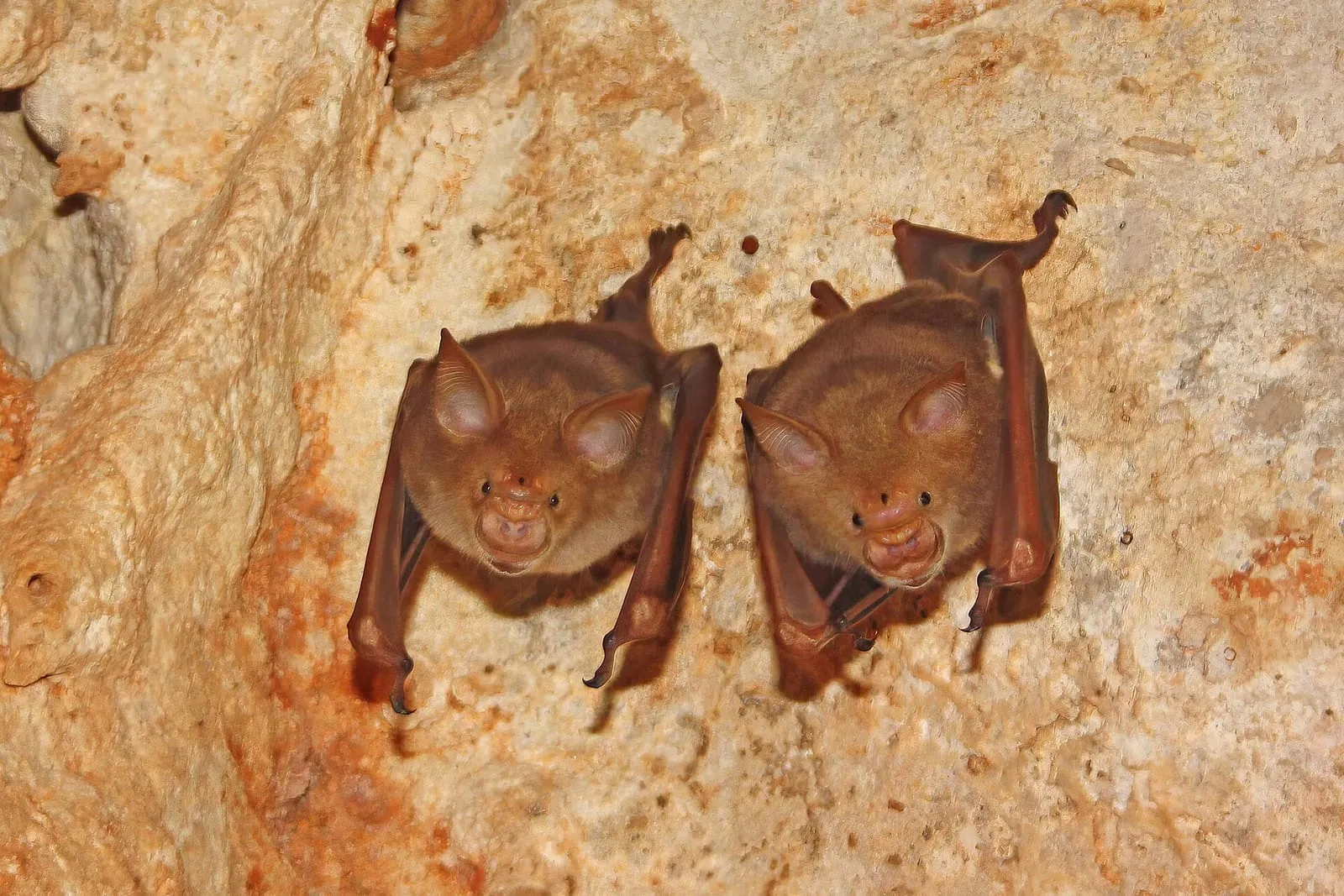
Bats are not blind at all. Their eyes are small but very sensitive, and they help bats see in conditions that people would call pitch dark. Bats do not have the sharp, colourful vision of humans, but they do not need it either.
How do their eyes work?
All bats have eyes that serve a real adaptive purpose. In echolocating bats, rod photoreceptors dominate the retina; the bats use their dim-light vision to find their way around and, in rare cases, to hunt.
According to the same study, echolocating bats have good visual sensitivity, which lets them see during the periods when they are active. Earlier results for the Daubenton’s bat show that its visual acuity is low. The same study found a visual brightness threshold equal to the light level of an open, cloudless landscape on a starry night. The study suggests that echolocating bats use sight not for hunting but for orientation in their surroundings.
Echolocation
Bats use echolocation to navigate and to find insect prey. The sound waves they produce are called ultrasound, and they lie above the frequencies people can hear. The sound waves a bat sends out bounce off nearby objects, and the echoes return to ears that are finely tuned to recognise the bat’s own distinctive calls.
When a bat senses an insect it wants to eat, it fires off a rapid series of calls to pin down exactly where its target is. A bat may vary its calls to suit the situation, with separate search, feeding and social calls. Each bat species has its own call pattern.
The call of the spotted bat (Euderma maculatum) can be faintly heard by people with good hearing. Researchers and wildlife managers can recognise and study bats by capturing their calls on specialised microphones and recorders.
Sight and echolocation together
By merging information from several senses, animals can make better decisions. According to one study, bats, as night-time hunters, rely on echolocation to find their way and to locate escaping prey, yet they have kept working vision despite its costs. This suggests that bats hunting in lit environments merge acoustic and visual information and approach their prey more efficiently.
Researchers fitted 21 wild bats (Nyctalus noctula) with recorders for light, sound and a motion sensor. When tracking prey in lit conditions, the bats sent out calls half as often and at a level 7 dB higher than in the dark. Their approach speeds were much higher, though: 5.2 m/s in the dark and 7.9 m/s in the light.
Test yourself
Three questions from the article. Pick an answer to find out.
Question 1 of 3
Are bats blind?
Bats are not blind; their eyes are small but very sensitive. Source: USGS
Show answer
Right answer: No, they are not blind
Bats are not blind; their eyes are small but very sensitive. Source: USGS
Question 2 of 3
Where do the sound waves that bats use for echolocation lie, compared with the frequencies people can hear?
The sound waves bats make are called ultrasound, and they lie above the frequencies people can hear. Source: nps.gov
Show answer
Right answer: Above the range people can hear (ultrasound)
The sound waves bats make are called ultrasound, and they lie above the frequencies people can hear. Source: nps.gov
Question 3 of 3
How does bats' vision compare with human vision?
Bats do not have the sharp, colourful vision of humans, but they do not need it either. Source: USGS
Show answer
Right answer: They lack our sharp, colourful vision, but they do not need it
Bats do not have the sharp, colourful vision of humans, but they do not need it either. Source: USGS