What state is the Titanic wreck in today?
What happened to the Titanic?
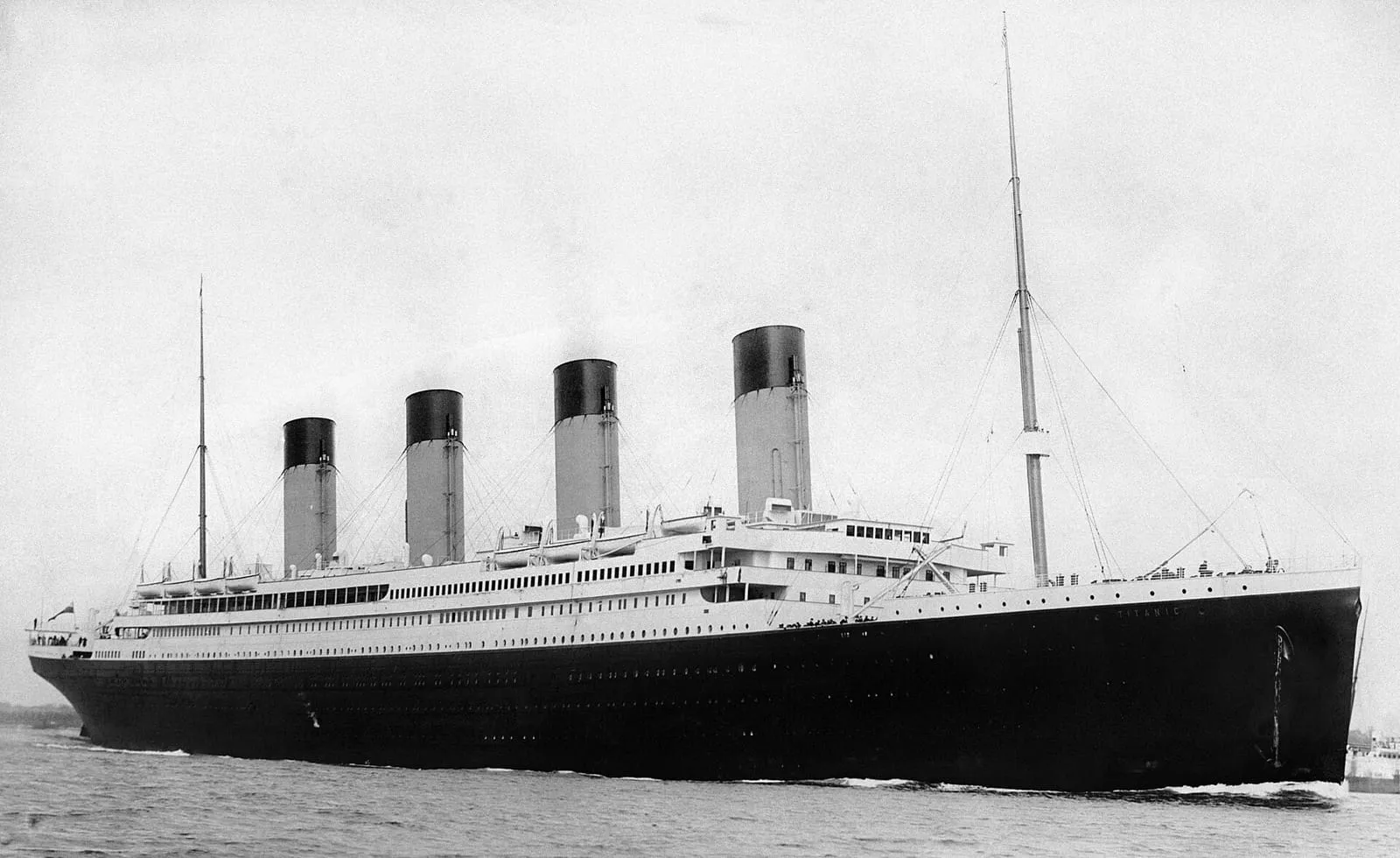
The Royal Mail Ship Titanic was believed to be unsinkable. On 14 April 1912, on her maiden voyage, Titanic hit an iceberg in the North Atlantic. That day, the world lost the biggest and most advanced passenger steamship of its time. On 15 April 1912, the most advanced passenger ship in the world struck an iceberg and sank, and 1,496 lives were lost.
How was the wreck found?
Oceanographer Robert Ballard first found the wreck in 1985. About 20 years later, Ballard returned with a team of researchers to map the wreck and study how it was decaying. Remotely operated vehicles carried out a “look, don’t touch” mission, a principle that is vital for protecting this memorial. Vehicles fitted with high-definition cameras could hold their position for a long time, revealing fine details never seen before.
What does the wreck look like today?
The wreck of the Titanic lies on the seabed more than two and a half miles below the surface. The side of Captain Smith’s cabin has rotted away, and the bathtub, pipes and taps can be seen clearly. The large hole at the base of the forward funnel was made when the funnel was torn off as the ship went down to the bottom.
The wreck is now covered in formations called “rusticles”, which look like rusty icicles. These are in fact communities of bacteria that slowly eat away the ship’s iron. Comparing how rusticles grow over time helps scientists better understand how the Titanic, and other metal shipwrecks, break down.
How is the wreck protected?
Finding the wreck opened the door to salvage as well as to exploration and scientific work. Because the wreck is tied to several countries, steps had to be taken to protect its integrity. So the wreck’s integrity had to be safeguarded. For the US, NOAA and the State Department worked out an international agreement together with representatives from the United Kingdom, Canada and France. The agreement recognises the wreck as a memorial to those who died and as a wreck of great archaeological, historical and cultural importance. It laid down rules covering research, exploration and salvage. Protecting the wreck will keep offering clues about the ship and its passengers.
The story of the Titanic’s sinking and of her ill-fated passengers has famously been told in films and books. The legend of the Titanic was even bigger than the ship. The ship lies on the seabed as a slowly changing memorial and a living laboratory. Down on the ocean floor, the Titanic lives on as a maritime memorial and as a scientific laboratory.
Test yourself
Three questions from the article. Pick an answer to find out.
Question 1 of 3
Who first found the wreck of the Titanic?
Oceanographer Robert Ballard first found the wreck in 1985. Source: oceantoday.noaa.gov
Show answer
Right answer: Oceanographer Robert Ballard
Oceanographer Robert Ballard first found the wreck in 1985. Source: oceantoday.noaa.gov
Question 2 of 3
What are the "rusticle" formations that cover the Titanic wreck?
These formations are in fact communities of bacteria that slowly eat away the ship's iron. Source: oceantoday.noaa.gov
Show answer
Right answer: Communities of bacteria that slowly eat away the ship's iron
These formations are in fact communities of bacteria that slowly eat away the ship's iron. Source: oceantoday.noaa.gov
Question 3 of 3
Roughly how far below the surface does the Titanic wreck lie?
The wreck of the Titanic lies on the seabed more than two and a half miles below the surface. Source: oceantoday.noaa.gov
Show answer
Right answer: More than two and a half miles
The wreck of the Titanic lies on the seabed more than two and a half miles below the surface. Source: oceantoday.noaa.gov