How does the immune system work?
What is the immune system?
The immune system is an army of cells, tissues and organs, trained to work as a team to stop, spot and wipe out harmful threats to the body. It can protect you from invaders such as bacteria, viruses, fungi and parasites. Your immune system is an intricate web of cells, tissues and organs that helps the body to resist infections and other illnesses.
When germs such as bacteria or viruses get into the body, attack and multiply, this is called an infection. Your immune system protects you from disease by fighting the germs. It defends the body against substances it sees as harmful or foreign. Such substances are known as antigens.
Two arms
People often picture the immune system as two separate platoons, an innate one and an adaptive one. Although they have different jobs and different specialities, they work together to prevent infection.
Innate immunity
Innate immunity is the body’s first line of defence against infection. Mucous membranes in the nose, throat and lungs can trap invaders before they cause infection. Enzymes such as the lysozyme in saliva and tears can kill microbes by attacking their outer membranes. Special cells called phagocytes can find microbes and clear them away.
The cells of the innate system work in a non-specific way; in other words, they can recognise nearly any microbe. The innate immune system starts work at once, or within a few hours, because it is always ready.
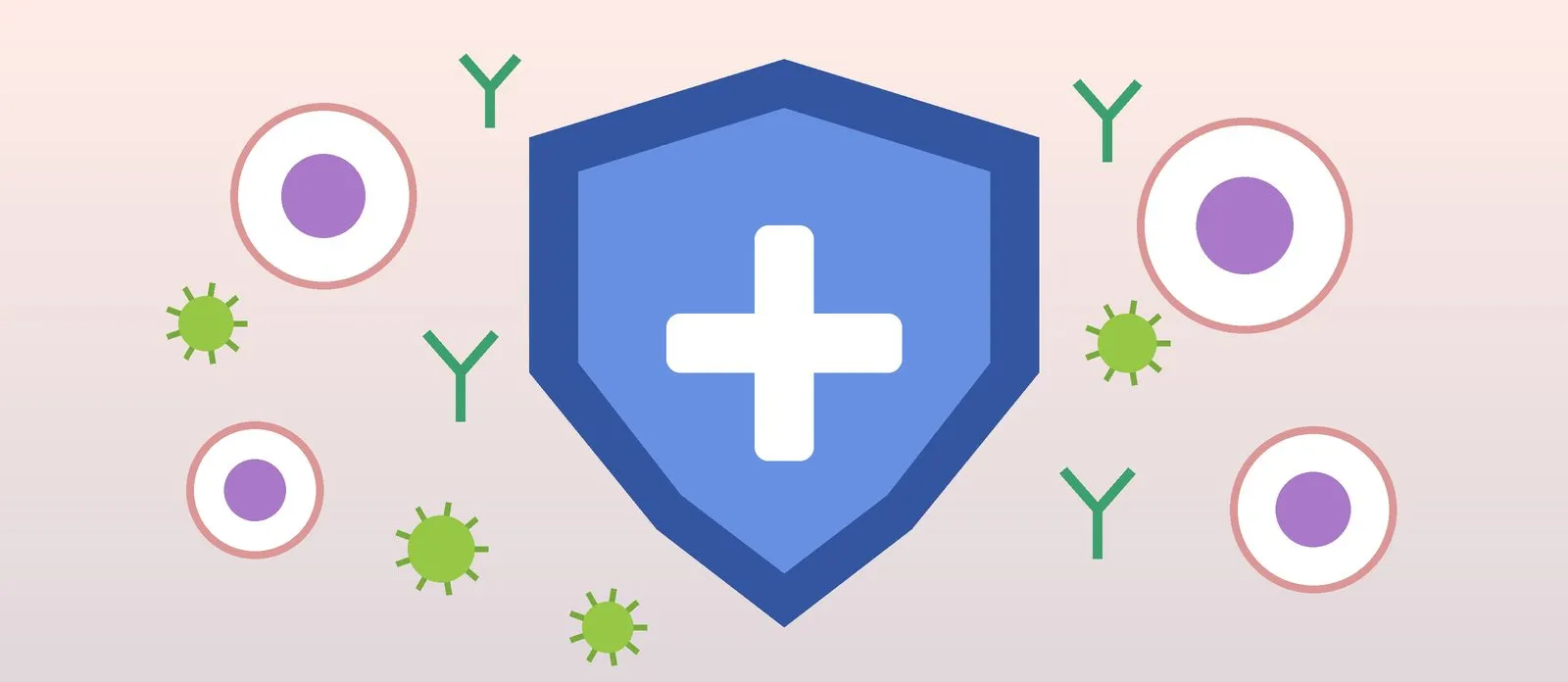
Adaptive immunity
The adaptive immune system is antigen-specific; its soldiers are trained to recognise and attack particular microbes. Our bodies cannot keep a full stock of fighters for every kind of microbe, because there are too many kinds. So the adaptive immune system needs several days to mount an effective response, while it builds fighters aimed at the microbe.
Antibodies are antigen-specific proteins that can attach to the surface of microbes. B cells are antigen-specific white blood cells that make antibodies, and T cells are antigen-specific white blood cells that kill microbes.
How is immunity remembered?
The adaptive immune system is named for its power to remember the microbes it has met. Whenever your immune system comes across a new microbe, it works out the best response and keeps that lesson in memory. Next time it meets the same invader, it can react faster and more effectively.
When your immune system recognises an antigen, it attacks it, and this is called an immune response. Part of this response is making antibodies.
Kinds of immunity
Innate immunity is the protection you have from birth. Active immunity develops when you are infected with a foreign substance or vaccinated against it.
Passive immunity occurs when you are given ready-made antibodies instead of making them with your own immune system. Newborn babies, for instance, carry antibodies from their mothers. This kind of immunity protects you straight away, but lasts only a few weeks or months.
Test yourself
Three questions from the article. Pick an answer to find out.
Question 1 of 3
When does the innate immune system start working?
The innate immune system starts work at once, or within a few hours, because it is always ready. Source: nigms.nih.gov
Show answer
Right answer: At once or within a few hours
The innate immune system starts work at once, or within a few hours, because it is always ready. Source: nigms.nih.gov
Question 2 of 3
How long does the adaptive immune system take to give an effective response?
The adaptive immune system needs several days to mount an effective response, while it builds fighters aimed at the microbe. Source: nigms.nih.gov
Show answer
Right answer: Several days
The adaptive immune system needs several days to mount an effective response, while it builds fighters aimed at the microbe. Source: nigms.nih.gov
Question 3 of 3
How long does passive immunity last?
Passive immunity protects you straight away, but lasts only a few weeks or months. Source: medlineplus.gov
Show answer
Right answer: Only a few weeks or months
Passive immunity protects you straight away, but lasts only a few weeks or months. Source: medlineplus.gov